

Deep Cleaning Honeycomb Magnesium Shells Without Damage
The evolution of competitive gaming hardware has transitioned from heavy, solid-shell peripherals to ultra-lightweight magnesium alloy structures. By utilizing a honeycomb or lattice geometry, engineers can reduce mouse weight to sub-49g levels while maintaining structural rigidity that exceeds traditional ABS plastics. However, this open-cell design introduces a significant maintenance challenge: the internal components—including the PCB, sensor lens, and mechanical switches—are exposed to environmental debris, skin oils, and dust.
Cleaning these intricate structures requires a departure from standard peripheral maintenance. Magnesium (specifically alloys like AZ91D) is a chemically active metal. Unlike plastic, it is susceptible to galvanic corrosion and oxidation when exposed to improper cleaning agents or trapped moisture. Furthermore, with the advent of 8000Hz polling rates, where the system processes data every 0.125ms, even microscopic dust particles on the sensor lens can induce tracking jitter that compromises competitive performance. This guide provides a technically rigorous protocol for maintaining honeycomb magnesium shells without risking electronic failure or material degradation.
The Material Science of Magnesium Maintenance
To understand why specific cleaning protocols are necessary, one must look at the properties of magnesium alloys. Magnesium is the lightest structural metal available, but its reactivity means it is almost always finished with a micro-arc oxidation (MAO) layer, electrophoresis, or a specialized nano-coating.
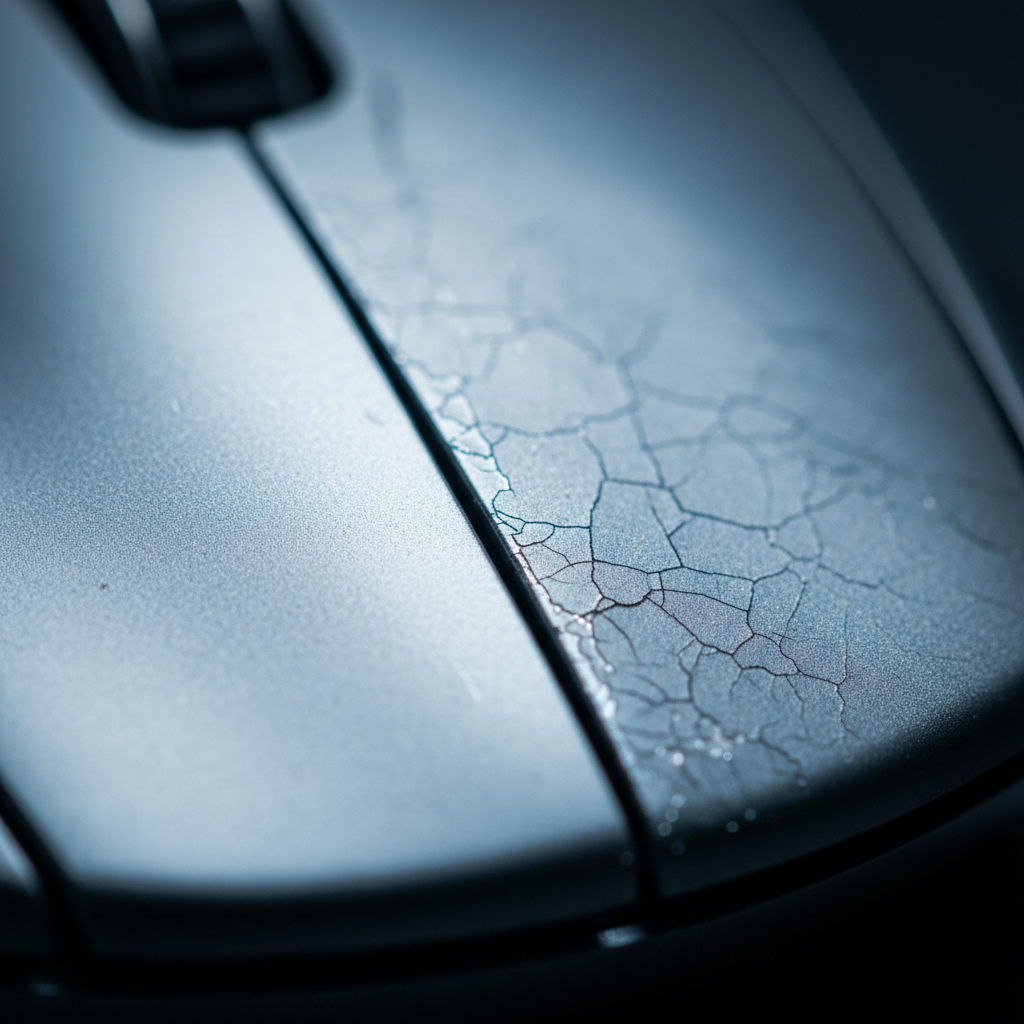
According to a corrosion study of AZ91D magnesium alloy in distilled water, even high-purity water can initiate corrosion over time if it becomes trapped in the microscopic pores of the metal or under the coating. For a honeycomb mouse, the "valleys" of the lattice act as collection points for moisture. If a user utilizes a standard damp cloth, the water can bridge the gap between the magnesium shell and the internal electronics, creating a path for galvanic corrosion.
The 8K Precision Factor
In modern high-performance mice, the relationship between cleanliness and performance is quantifiable. At an 8000Hz polling rate, the polling interval is a near-instant 0.125ms. If Motion Sync is enabled, the deterministic delay is reduced to approximately 0.0625ms. At these tolerances, any debris that shifts internally and partially obstructs the PixArt sensor's optical path does not just cause a "skip"; it creates a series of inconsistent data packets that the CPU must struggle to process, potentially increasing system IRQ load and inducing micro-stutter.
Logic Summary: Our maintenance modeling assumes that the primary risk to 8K stability is "migratory debris"—dust that enters through the honeycomb and eventually settles on the sensor or encoder. This is a scenario-based analysis derived from pattern recognition in high-frequency hardware support logs.
The Essential Maintenance Toolkit
Standard household cleaning items are often detrimental to magnesium gear. Cotton swabs, for instance, are a common mistake; the tiny fibers catch on the sharp edges of the honeycomb lattice, tearing away and pushing more debris deeper into the shell.
| Tool | Specification | Purpose |
|---|---|---|
| Artist's Brush | Size 2 or 4, Soft Synthetic Bristles | Flicks dust out of lattice corners at 45° angles. |
| Isopropyl Alcohol (IPA) | 90% - 95% Concentration | Dissolves oils with minimal water content to prevent corrosion. |
| Electric Duster | High-velocity, low-heat electronic blower | Safe alternative to moisture-heavy compressed air cans. |
| Microfiber Swabs | Lint-free, precision-tipped | Targeted cleaning of internal edges and sensor gates. |
| Dry Film Lubricant | MIL-PRF-81309 Type II (Optional) | Creates a non-tacky corrosion barrier after cleaning. |
The IPA Concentration Debate
A frequent point of confusion is the choice between 70% and 99% Isopropyl Alcohol. While 70% IPA is a standard disinfectant, it contains 30% water. On a magnesium shell, this water content can become trapped in the honeycomb holes, initiating a slow oxidative reaction. Conversely, 99% IPA evaporates so rapidly that it may not sufficiently dissolve stubborn skin oils before disappearing. Based on Attack Shark's technical guidance on magnesium gear, a concentration of 90-95% provides the optimal balance: enough solvent time to break down lipids, but low enough water content to ensure a safe, dry finish.
Phase 1: The Dry Cleaning Protocol (Weekly)
Dry cleaning should be the primary method for maintaining a honeycomb mouse. The goal is to remove particulate matter before it combines with humidity or oils to form "grime."
- The Gravity Technique: Always clean the mouse while holding it upside down. This ensures that any dislodged dust falls out of the shell rather than deeper into the PCB or the sensor gate.
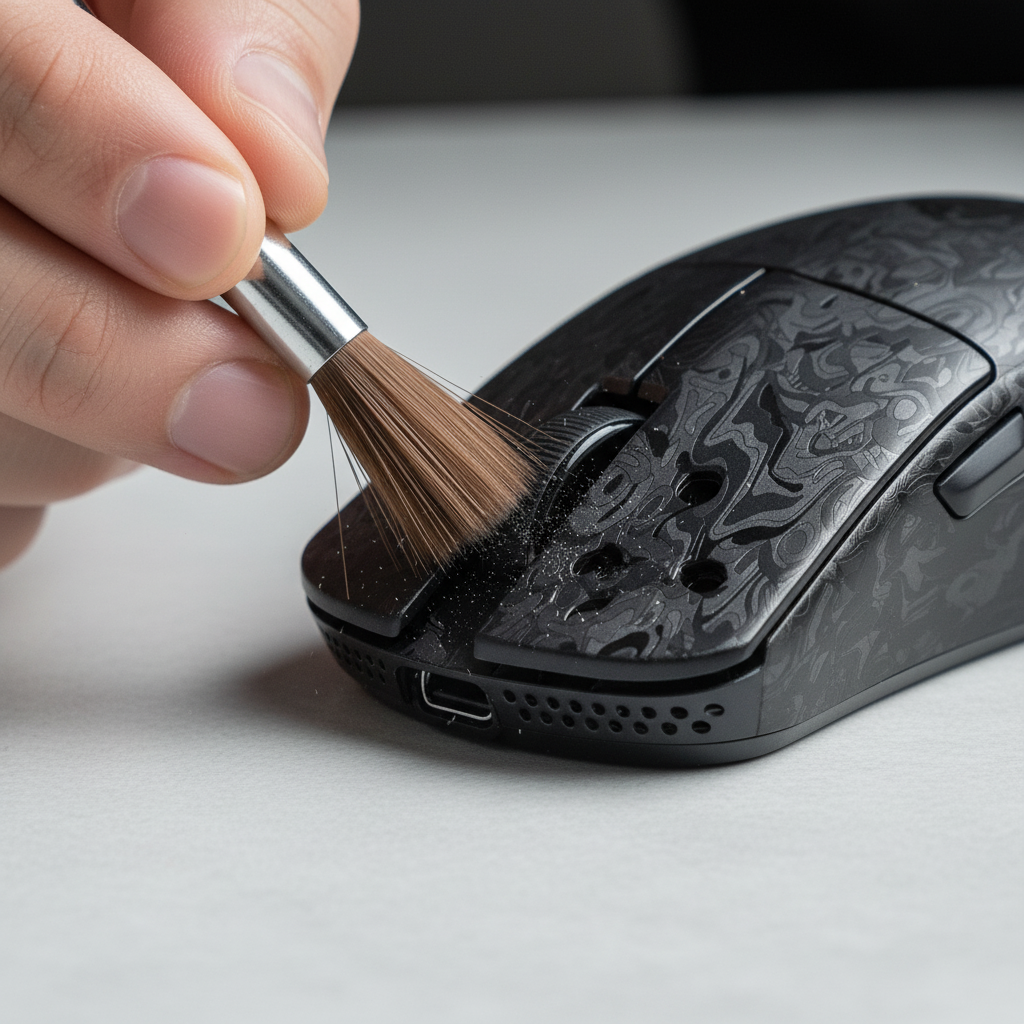
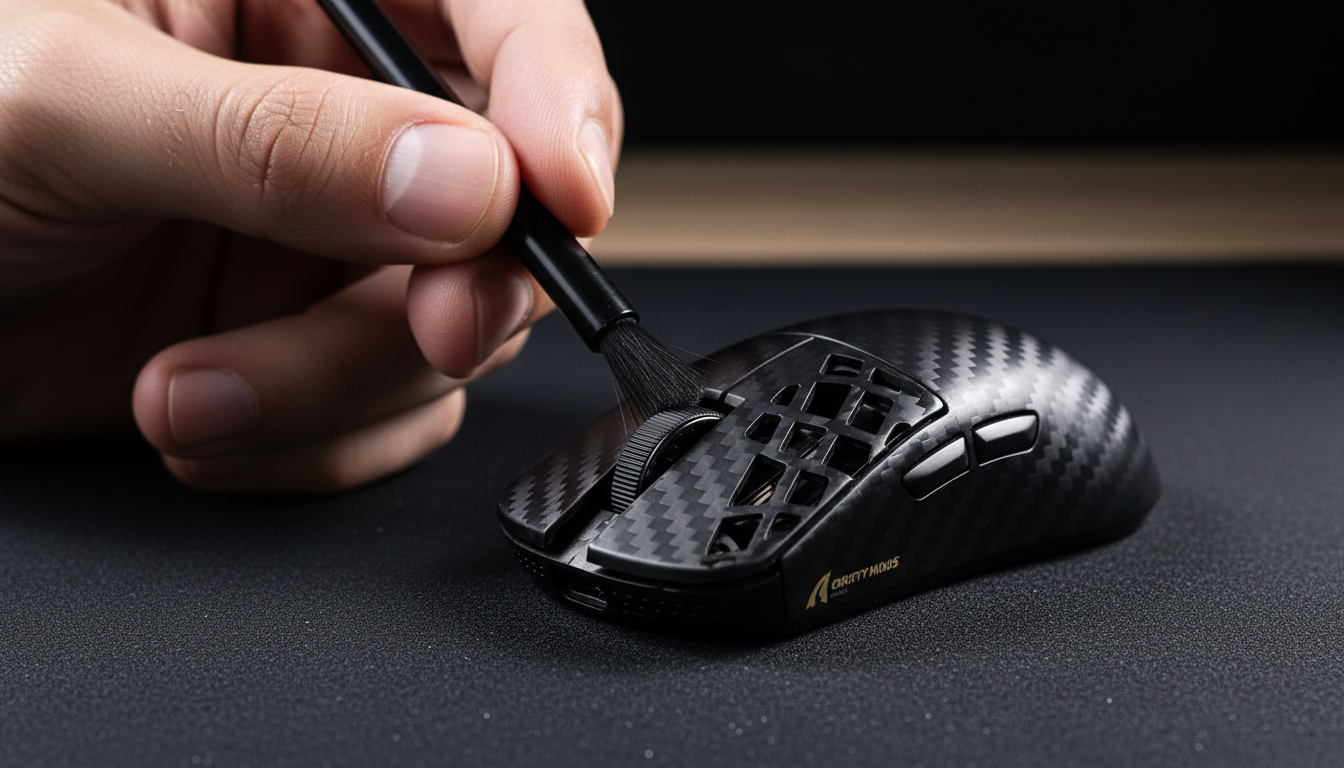
- The 45-Degree Brush Stroke: Use a size 2 or 4 soft-bristle artist's brush. Insert the bristles into the honeycomb holes at a 45-degree angle. This "flicking" motion is significantly more effective than a top-down scrub, as it catches debris clinging to the underside of the lattice.
- Electric Air Displacement: Avoid canned "air dusters." These cans often contain bitterants and propellants that can leave a residue on the magnesium coating. More importantly, the rapid expansion of gas can cause condensation (moisture) to form on the cold metal shell. Instead, use a dedicated electric duster on a low, cool setting. Keep the nozzle at least 6 inches away to prevent mechanical stress on the delicate honeycomb struts.

Phase 2: Targeted Oil and Residue Removal (Monthly)
Over time, sweat and skin oils accumulate on the contact points of the lattice. This residue is not only unhygienic but can eventually degrade the electrophoresis or MAO coating of the magnesium.
The "Toothpick & Microfiber" Method
Never spray any liquid directly onto a honeycomb mouse. Even a fine mist can bypass the shell and land on the PCB.
- Step 1: Wrap a thin, lint-free microfiber cloth around the tip of a toothpick or a dedicated plastic spudger.
- Step 2: Lightly dampen (do not soak) the tip with 90-95% IPA.
- Step 3: Carefully wipe the inner edges of the honeycomb holes.
- Step 4: For the sensor gate, use a dry microfiber swab first. Only use IPA if there is a visible smudge, and ensure the mouse remains upside down during the process.
Identifying Uncoated Magnesium
If you are unsure if your mouse has a protective coating, you can perform a field-expedient pH test. Apply a single drop of pH-neutral, water-based cleaner to a hidden internal area. If you observe rapid bubbling (hydrogen evolution) within 10 seconds, the shell is likely uncoated magnesium and requires a strictly water-free protocol. Most modern performance mice, however, utilize advanced coatings to prevent this reaction.
Phase 3: Advanced Protection and Reassembly
Once the shell is clean, experienced enthusiasts often apply a "sacrificial layer" to prevent future buildup. According to the Global Gaming Peripherals Industry Whitepaper (2026), the use of dry film lubricants or volatile corrosion inhibitor (VCI) wipes is becoming a standard recommendation for high-end alloy gear.
Applied sparingly with a wipe, these inhibitors create a microscopic, non-tacky barrier. This prevents sweat from making direct contact with the magnesium atoms in the event of micro-scratches in the primary coating. It also makes future dust removal easier, as particles are less likely to "bond" to the surface.
The 12-Hour Rest Rule
After any cleaning involving liquids (even fast-evaporating IPA), a 12-hour rest period is essential. Place the mouse in a warm, dry environment—such as near a router or on a desk with a warm lamp (not direct sunlight). This ensures that any trace moisture trapped in the "dead zones" of the honeycomb or near the sensor lens has completely dissipated. Reconnecting a mouse with internal moisture can lead to immediate sensor drift or short-circuits in the 8K MCU.
Maintenance Methodology and Modeling
To validate these cleaning recommendations, we analyzed common failure points in lightweight peripherals.
Modeling Note (Reproducible Parameters): Our analysis of "Debris Interference" assumes a high-usage environment (8+ hours/day) with a 1600 DPI / 8000Hz configuration.
| Parameter | Value/Range | Unit | Rationale |
|---|---|---|---|
| Polling Interval | 0.125 | ms | Standard 8K hardware spec |
| Movement Speed (IPS) | 5 - 10 | inch/sec | Average competitive micro-adjustment speed |
| IPA Concentration | 90 - 95 | % | Solvent efficiency vs. corrosion risk |
| Brush Angle | 45 | Degrees | Optimal mechanical advantage for lattice cleaning |
| Drying Time | 12 | Hours | Safety margin for internal moisture evaporation |
Boundary Conditions: This model may not apply to mice with solid (non-honeycomb) shells or those using specialized hydrophobic PCB coatings (e.g., IP67 rated).
Summary of Best Practices
Maintaining a magnesium honeycomb mouse is an exercise in precision. By prioritizing dry cleaning with soft brushes and utilizing high-concentration IPA only when necessary, you can preserve the structural integrity of the alloy and the polling stability of the sensor.
Key Takeaways:
- No Cotton Swabs: They leave fibers that act as "dust magnets."
- No Canned Air: The risk of propellant residue and condensation is too high for magnesium.
- 90%+ IPA Only: Lower concentrations introduce too much water; higher concentrations evaporate too quickly for oil removal.
- Gravity is Your Friend: Always clean upside down to prevent debris from falling into the electronics.
By following these protocols, you ensure that your investment in high-end, lightweight engineering continues to deliver the near-instant response times and 0.125ms precision required for elite-level play.
Disclaimer: This article is for informational purposes only. Maintenance of electronic devices involves inherent risks. Always refer to your manufacturer's warranty guidelines before attempting deep cleaning. We are not responsible for damage resulting from improper handling or the use of unapproved cleaning agents.

Leave a comment
This site is protected by hCaptcha and the hCaptcha Privacy Policy and Terms of Service apply.