

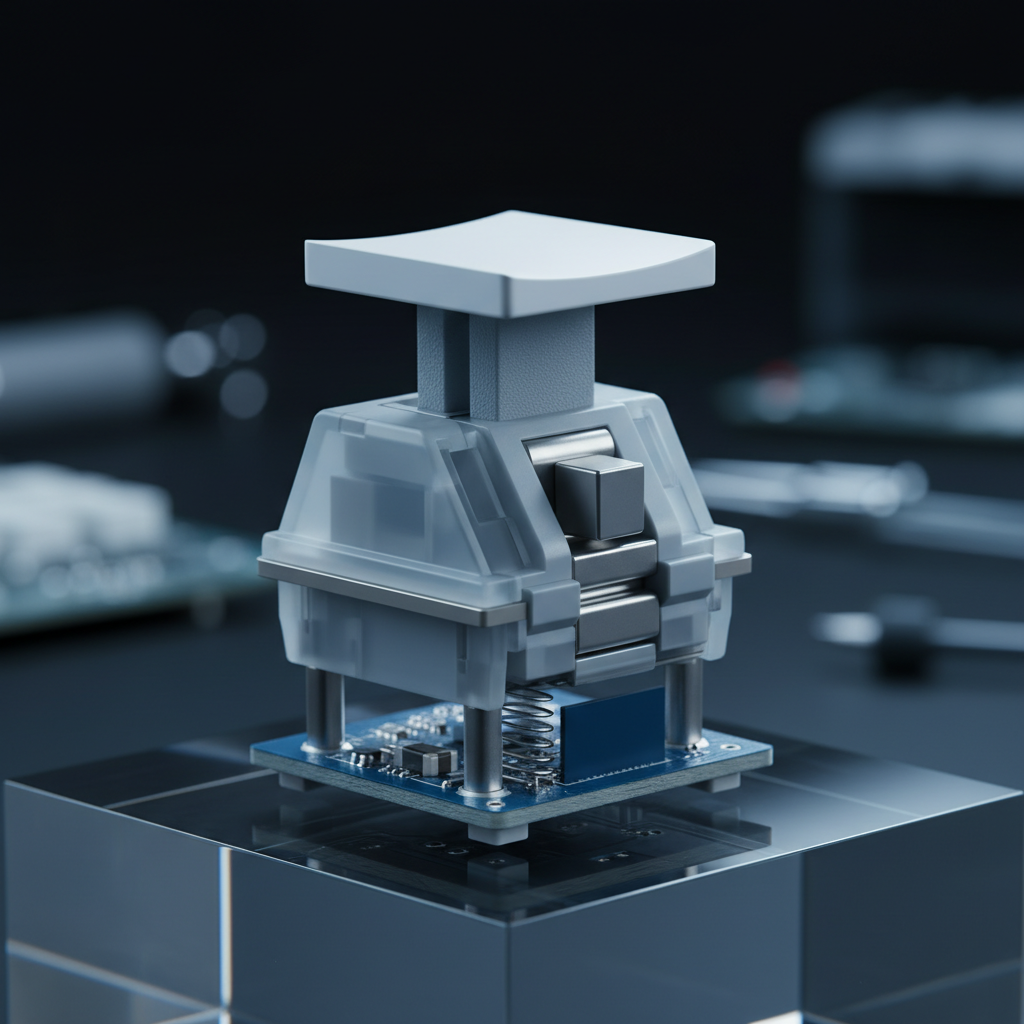
Low-Profile Form Factors: The Case for Shorter Key Travel
The evolution of mechanical keyboards has shifted from the pursuit of maximum tactile depth to the optimization of physical efficiency. For competitive gamers and high-volume typists, the "low-profile" form factor represents more than a stylistic choice; it is a technical recalibration of the interface between human intent and digital execution. By reducing the total height of the keyboard chassis and the travel distance of the switches, these devices aim to solve two specific problems: ergonomic wrist extension and input latency cycles.
Evaluating these form factors requires a departure from subjective "feel" toward a data-driven analysis of actuation curves, kinematics, and musculoskeletal strain. While conventional marketing often conflates "shorter travel" with "faster speed," the reality is a nuanced interplay of hardware polling, switch reset distances, and the biological limits of human reaction time.
The Kinematics of Actuation: Speed vs. Perception
The primary argument for low-profile switches is the reduction in physical travel. A standard mechanical switch typically features a total travel of 4.0mm with an actuation point at 2.0mm. In contrast, low-profile switches often reduce total travel to ~2.7mm to 3.0mm, with actuation occurring as early as 1.0mm to 1.2mm.
Mathematically, the time saved by moving a finger 1.0mm less is marginal when viewed in isolation. If a finger moves at a conservative velocity of 100mm/s, the physical travel time saved is approximately 10 milliseconds. However, when compared to the average human reaction time of 150ms to 250ms, this micro-advantage is often "swamped" by biological latency. The true performance gain is found not in the initial press, but in the reset cycle—the time it takes for a switch to return to a state where it can be pressed again.
Modeling the Rapid Trigger Advantage
The introduction of Hall Effect (HE) and magnetic sensing technology has decoupled physical travel from the actuation logic. In a standard mechanical switch, the "hysteresis"—the distance between the actuation point and the reset point—is fixed (typically ~0.5mm). Low-profile HE switches allow for "Rapid Trigger" functionality, where the switch resets the instant the finger begins to lift, regardless of the physical position in the travel.
Modeling Note (Scenario: Competitive Rhythm Gaming) This model assumes a high-intensity workload (200-300 APM) with a fast finger lift velocity.
Parameter Value Unit Rationale Mechanical Reset Distance 0.5 mm Standard switch hysteresis Rapid Trigger Reset Distance 0.1 mm Optimized HE sensing Finger Lift Velocity 120 mm/s Fast, deliberate gaming motion Mechanical Debounce 5 ms Required for physical leaf contacts HE Processing Latency ~0 ms Negligible digital sensing Analysis: Under these assumptions, a low-profile HE switch achieves a ~8ms latency reduction per keypress cycle compared to a standard mechanical switch. This is a deterministic hardware advantage that directly impacts performance in high-speed genres like rhythm games or MOBAs.
Ergonomics and the Moore-Garg Strain Index
The ergonomic benefit of low-profile keyboards is frequently attributed to shorter key travel, but research suggests the primary advantage is the reduction in typing height. A lower keyboard allows the user to maintain a more neutral wrist angle, reducing the degree of wrist extension.
To quantify the risk associated with high-intensity gaming on various form factors, we can apply the Moore-Garg Strain Index (SI). This tool, adopted by the OSHA Technical Manual, screens for the risk of distal upper extremity disorders.
Scenario Analysis: The High-APM Rhythm Gamer
For a persona characterized by small hands (length ~16.5cm) and high actions-per-minute (APM), the repetitive nature of the task creates a significant physiological load.
| Variable | Multiplier | Rationale |
|---|---|---|
| Intensity | 1.5 | Forceful taps required for accuracy |
| Efforts per Minute | 4.0 | High APM (200-300) |
| Posture | 1.2 | Low-profile reduces wrist extension |
| Speed of Work | 2.0 | Very high movement speed |
| Duration per Day | 1.5 | ~3 hours of daily play |
| Final SI Score | 10.8 | Category: Hazardous |
Logic Summary: While a low-profile board improves the "Posture" multiplier (reducing it from a typical 1.5-2.0 on standard boards to 1.2), the overall SI score remains in the hazardous range due to the extreme speed and intensity of competitive play. This indicates that while low-profile form factors mitigate strain, they do not eliminate the fundamental risks of high-intensity repetitive motion.
System Integration: Polling Rates and 8K Performance
A high-performance keyboard is only as effective as the system's ability to process its inputs. Modern competitive standards are shifting toward 8000Hz (8K) polling rates, which provide a report every 0.125ms.
The 8K Polling Constraint Checklist
When utilizing low-profile boards at 8000Hz, several technical constraints must be observed to avoid performance degradation:
- CPU Bottlenecks: Processing 8000 interrupts per second is an IRQ-heavy task. It primarily stresses single-core performance and OS scheduling. Users may notice frame drops in CPU-bound games if the system is not optimized.
- Motion Sync Latency: Enabling Motion Sync aligns the sensor framing with the USB Start of Frame. While this adds ~0.5ms at 1000Hz, at 8000Hz, the delay scales down to ~0.06ms, making it virtually negligible for the user.
- USB Topology: Devices must be connected directly to the Rear I/O ports of the motherboard. Using USB hubs or front-panel headers introduces shared bandwidth and potential signal interference, which can lead to packet loss at 8K frequencies.
- DPI and Saturation: To fully saturate the 8000Hz bandwidth, the movement (or in this case, the scan rate of the keys) must be high enough. For mice, this requires at least 10 IPS at 800 DPI or 5 IPS at 1600 DPI. For keyboards, it requires a high internal scan rate to ensure the 8K polling interval isn't just reporting the same data multiple times.
Adaptation and Practitioner Observations
Switching to a low-profile form factor is not an overnight transition. Based on patterns observed in community feedback and technical support logs, most users require a 1-2 week adjustment period.
The "Floaty" Sensation
Seasoned players often report a "floaty" feeling initially. This is due to the lack of a definitive bottom-out sensation at the 4.0mm mark they are accustomed to. Muscle memory must be retrained to recognize the actuation point earlier in the stroke. However, the reduced "key wobble" inherent in many low-profile switch designs (due to shorter stems) provides a consistent benefit for rapid double-tapping.
The Wrist Rest Pitfall
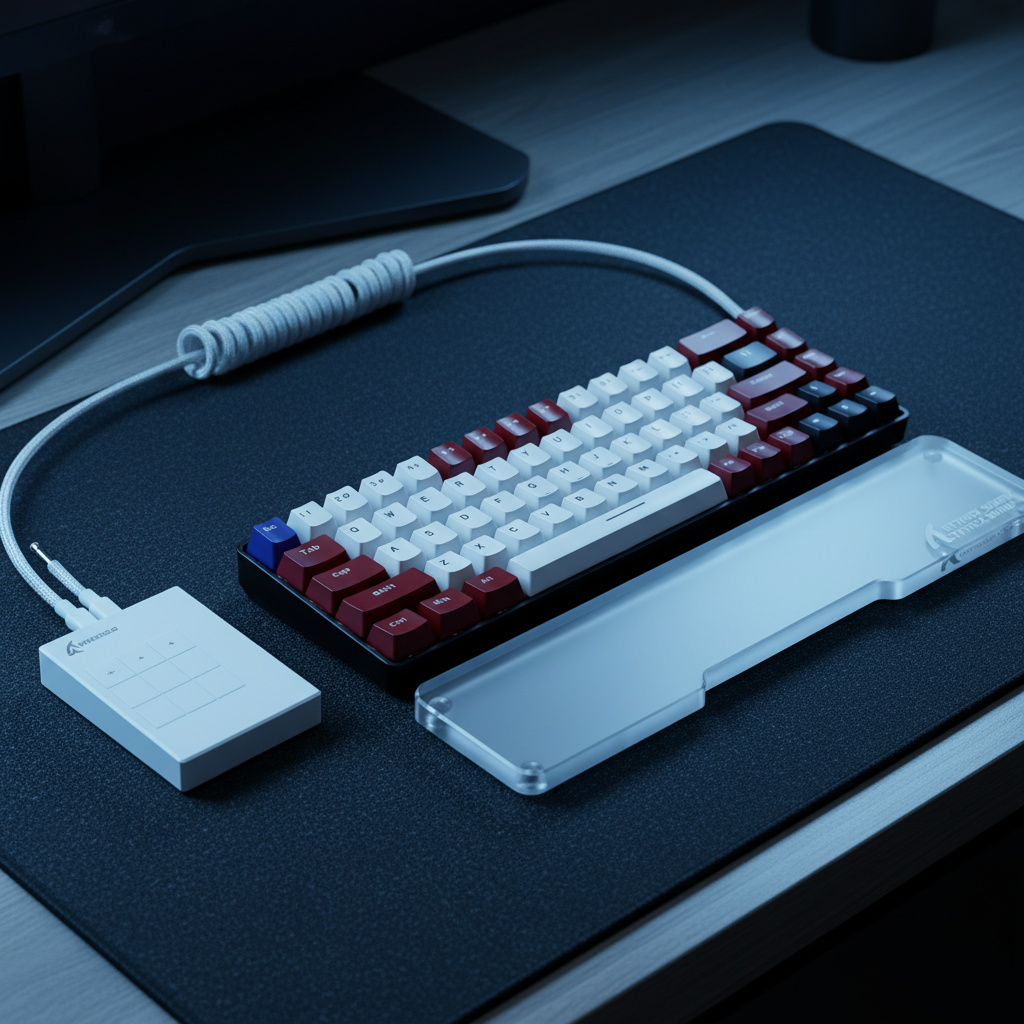
A common mistake is pairing a low-profile keyboard with a standard, thick wrist rest. This actually negates the ergonomic benefit by forcing the wrists into a downward angle or over-extending them. To maintain a neutral posture, a low-profile board should be paired with a thin, flat rest that aligns perfectly with the front edge of the chassis.
Compliance, Safety, and Build Integrity
As low-profile keyboards become more feature-rich, incorporating wireless tri-mode connectivity (2.4GHz, Bluetooth, Wired) and high-capacity lithium batteries, compliance with international safety standards becomes paramount.
Battery and Transport Standards
Devices containing lithium-ion batteries must adhere to strict transport and safety regulations:
- UN 38.3: This United Nations standard ensures batteries can withstand the rigors of transport, including thermal testing, vibration, and shock.
- IEC 62368-1: This is the global safety standard for ICT equipment. It focuses on energy-based safety, ensuring that electrical, thermal, and mechanical hazards are mitigated during use.
- IATA Guidance: For international shipping, batteries must comply with IATA Packing Instructions 966/967, which govern how batteries are contained within equipment.
Material Compliance
For the European market, keyboards must comply with the RoHS Directive (2011/65/EU), restricting hazardous substances like lead and mercury, and the REACH Regulation, which requires the disclosure of Substances of Very High Concern (SVHC) via the ECHA SCIP Database.
Final Technical Verdict
The case for low-profile form factors rests on two pillars: postural health and input efficiency. While the physical travel distance offers a marginal speed gain for standard typing, the integration of Hall Effect technology and Rapid Trigger provides a measurable ~8ms advantage for competitive gaming.
However, users must view the keyboard as part of a larger system. The benefits of a low-profile board can be nullified by poor ergonomic pairings (thick wrist rests) or system-level bottlenecks (USB hubs). For the value-oriented gamer, the transition to low-profile is a strategic move toward a more sustainable and responsive setup, provided the spec sheet—including polling rates, switch technology, and safety certifications—is scrutinized holistically.
According to the Global Gaming Peripherals Industry Whitepaper (2026), the industry is moving toward a "performance-first" ergonomics model where height reduction is the new standard for professional-grade gear.
Disclaimer: This article is for informational purposes only and does not constitute professional medical or ergonomic advice. Users with pre-existing musculoskeletal conditions should consult a qualified physiotherapist before changing their workstation setup.

Leave a comment
This site is protected by hCaptcha and the hCaptcha Privacy Policy and Terms of Service apply.