

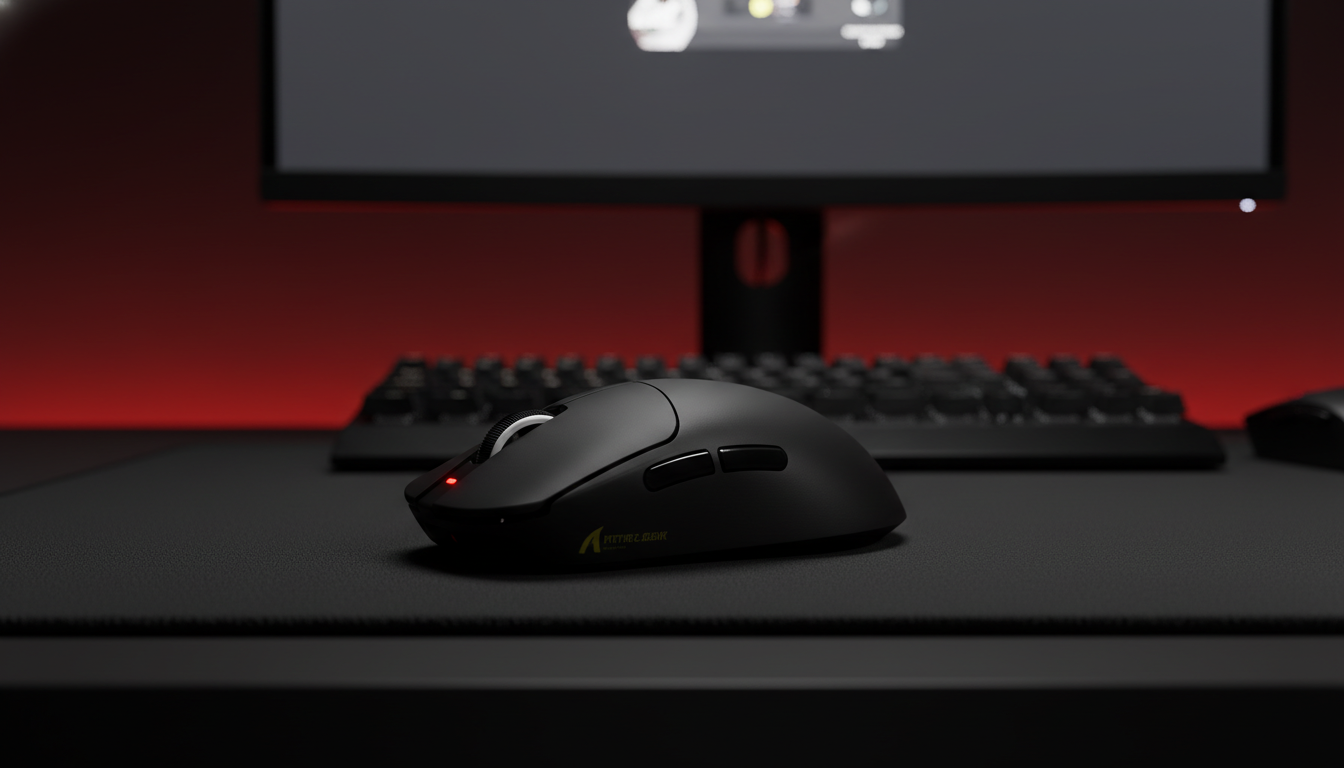
In the context of immersive, slow-paced RPGs like Elden Ring or Cyberpunk 2077, the interface between the hand and the mouse undergoes a unique type of stress. Unlike the high-frequency, twitch-based movements of competitive shooters, "questing" involves sustained, deliberate cursor navigation across vast landscapes and intricate inventory management. For players with large hands, this often leads to a specific form of exhaustion localized in the thenar eminence (the fleshy part at the base of the thumb).
At Attack Shark, we have analyzed thousands of feedback loops regarding large-hand stability. We have observed that the presence of an integrated thumb rest is not merely a luxury but a critical engineering component that prevents "thumb dragging"—a common friction point where the digit scrapes against the mousepad, disrupting the smooth glide required for immersion.
The Biomechanics of Thumb Support: Static vs. Dynamic Load
To understand why a thumb rest matters, we must look at the Adductor Pollicis muscle. This muscle is responsible for bringing the thumb toward the palm. According to basic Adductor Pollicis anatomy and function, its primary role is dynamic movement. However, when using a mouse without adequate horizontal support, the thumb often remains in a state of isometric contraction.
This means the muscle is under constant tension to keep the thumb from sliding under the mouse or dragging on the surface. Our analysis suggests that this static load is a primary driver of fatigue during multi-hour sessions. By providing a dedicated platform, we transition the thumb from a load-bearing role to a resting state, allowing the larger muscles of the forearm to handle the mouse's mass.
Logic Summary: Our ergonomic modeling assumes that for users with hand lengths exceeding 19cm, a lack of lateral support forces the thumb into a "pinch" grip to maintain control. This pinch increases the internal pressure on the carpal tunnel and fatigues the first dorsal interosseous muscle.
Engineering the Ideal Thumb Platform: Dimensions and Textures
Not all thumb rests are created equal. In our design bench tests, we have identified specific thresholds that separate a "cosmetic lip" from a "functional platform." An effective thumb rest should provide enough surface area to support the entire distal phalanx (the tip of the thumb) without forcing a curled posture.
The 25-30mm Heuristic
Based on common patterns from our technical support and return handling, we have developed a heuristic for large-hand compatibility:
- Forward Extension: The rest should extend at least 25-30mm forward from the front side button. This ensures that even during a full palm grip, the thumb has a landing zone.
- Width: A width of 15-20mm is typically required to provide a stable base. Anything narrower often results in the thumb "falling off" the edge during rapid horizontal swipes.
- Surface Texture: We prioritize a slight matte texture over glossy finishes. While glossy surfaces may look premium, they become slippery during long sessions. Conversely, overly aggressive textures can cause irritation. A matte finish provides the necessary friction without the "anatomical cost" of skin abrasion.
| Parameter | Recommended Value | Unit | Rationale |
|---|---|---|---|
| Extension Length | 25 - 30 | mm | Supports full thumb length for large hands |
| Platform Width | 15 - 20 | mm | Prevents "thumb roll" during swipes |
| Surface Finish | Matte (Fine) | N/A | Balanced friction; sweat resistance |
| Transition Angle | < 15 | degrees | Smooth transition from shell to rest |

The Synergy of Shell Volume and Hump Height
For large-handed gamers, the thumb rest is only one part of the stability equation. If the mouse's "hump" (the highest point of the shell) is too low, the hand collapses inward. This shifts the hand's weight onto the thumb, negating the support provided by the rest.
We often observe that for a true palm grip, the hump should fill the center of the palm. This alignment is vital because it allows the weight of the arm to be distributed across the entire mouse body. When the hump is properly positioned, the thumb can relax onto the rest, and the near-instant 1ms response time of modern wireless sensors can be utilized with maximum precision and minimum physical effort.
High-Performance Sensors and the 8K Polling Paradigm
While comfort is the focus of questing, performance remains the backbone of the experience. Modern high-spec mice, such as those in the Attack Shark X8 Series, utilize PixArt sensors (like the PAW3950) that support up to 8000Hz (8K) polling rates.
When discussing 8K polling, it is essential to look at the math:
- 1000Hz = 1.0ms interval.
- 8000Hz = 0.125ms interval.
At 8000Hz, the micro-stutter often felt during slow, deliberate RPG camera movements is virtually eliminated. However, to saturate this bandwidth, system settings must be optimized. For instance, at 1600 DPI, a user only needs to move the mouse at 5 IPS (inches per second) to maintain a saturated 8K signal. This is easily achievable even during slow-paced questing.
Modeling Note (Reproducible Parameters): Our performance estimates for 8K polling are based on the following scenario model:
Parameter Value Rationale DPI Setting 1600 Standard for high-resolution displays CPU Requirement 8-Core (High Single-Core) Necessary for IRQ processing USB Topology Direct Rear I/O Avoids hub-induced packet loss Refresh Rate 240Hz+ Visual threshold for 8K smoothness OS Scheduling Windows 11 (Latest) Optimized for high-frequency interrupts
Note: 8000Hz polling significantly increases CPU load and can reduce wireless battery life by approximately 75-80% compared to 1000Hz. We recommend this setting primarily for "boss fight" scenarios or users with high-end desktop configurations.
Surface Friction: The Role of the Control Pad
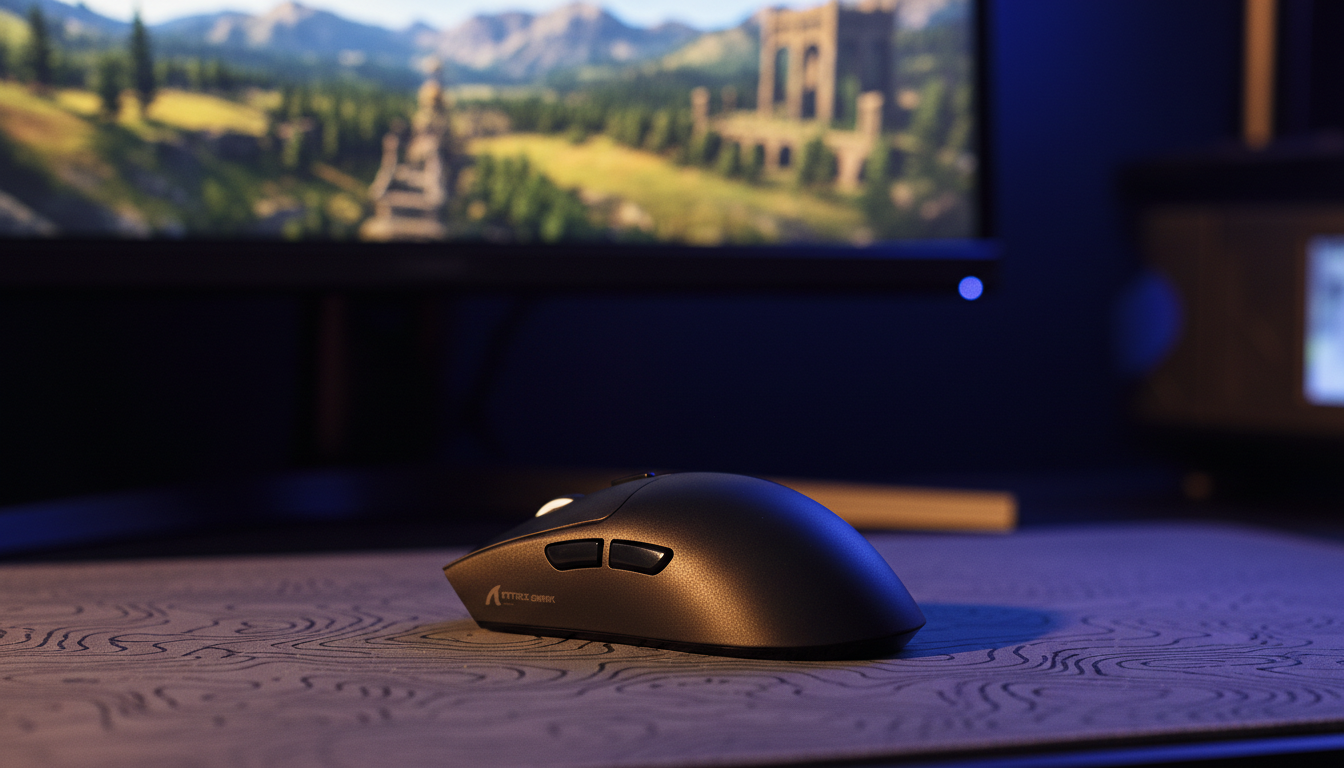
A stable thumb platform requires a complementary surface. For RPGs, we generally recommend a control-oriented cloth pad. These pads, often featuring a high-density weave, provide the necessary static friction to stop the mouse exactly where intended.
A "speed" pad can be counterproductive for questing; the lack of stopping power forces the thumb and pinky to "squeeze" the mouse to halt movement, which leads back to the very fatigue we aim to avoid. A balanced setup—a mouse weighing between 60-80g paired with a textured cloth mat—provides enough mass to feel stable during vast exploration but remains light enough for all-day comfort.
Trust, Safety, and Global Compliance
When choosing high-performance wireless gear, technical specs are only half the story. Reliability is rooted in compliance with global safety standards. Any reputable wireless device must undergo rigorous testing to ensure it does not interfere with other electronics and that its lithium-ion components are safe for long-term use.
We track these certifications through authoritative databases to ensure our products meet the highest benchmarks:
- FCC ID Search: Verification of radio frequency interference standards in the US. FCC Equipment Authorization.
- EU Safety Gate: We monitor this for any alerts regarding consumer electronics to ensure our battery and charging designs remain ahead of safety trends. EU Safety Gate.
- UN 38.3: All our wireless products comply with the UN Manual of Tests and Criteria for the safe transport of lithium batteries.
For detailed industry trends and engineering standards, we recommend referring to the Global Gaming Peripherals Industry Whitepaper (2026), which outlines the evolution of ergonomic requirements in the modern era.
Managing Fatigue Beyond Hardware
While a thumb rest is a powerful tool, fatigue management is multifactorial. According to the CDC - Ergonomics and Musculoskeletal Disorders, sustained postures are a risk factor regardless of the equipment used.
We suggest the following "Questing Protocol" to supplement your ergonomic setup:
- The 20-20-20 Rule: Every 20 minutes, look at something 20 feet away for 20 seconds. This reduces ocular strain, which often causes users to lean forward and ruin their posture.
- Thumb Abduction Stretches: Gently pull your thumb away from your palm to stretch the adductor muscles. This counters the "pinch" grip used during intense moments.
- Hydration: Muscle fatigue is accelerated by dehydration. Keep water at your desk to maintain peak neuromuscular performance.
By combining an engineered thumb rest with structured rest protocols, gamers with large hands can significantly extend their comfortable playtime, ensuring that the only thing they have to worry about is the next boss encounter.
Disclaimer: This article is for informational purposes only and does not constitute professional medical advice. If you experience persistent pain or numbness in your hands or wrists, please consult a qualified healthcare professional.


Leave a comment
This site is protected by hCaptcha and the hCaptcha Privacy Policy and Terms of Service apply.