


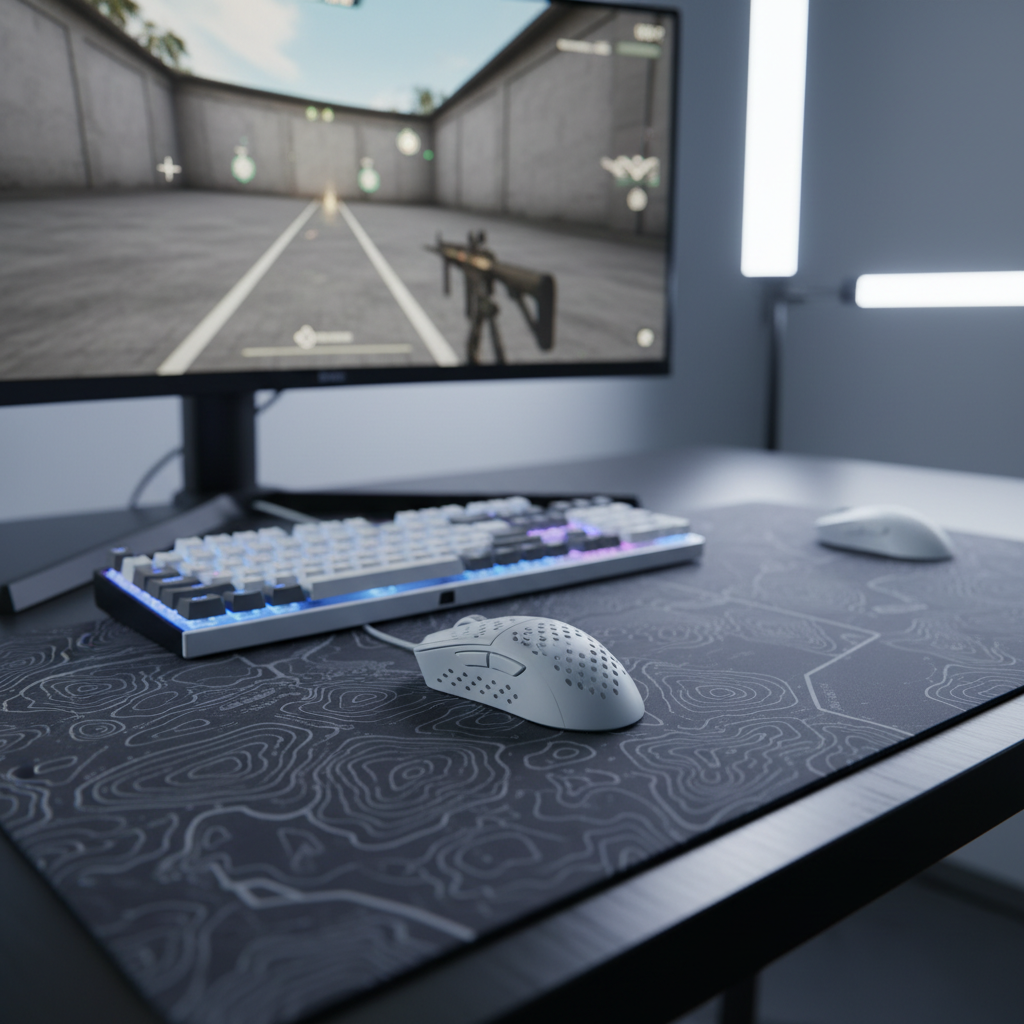
X/Y-Empfindlichkeitsskalierung: Kalibrierung zur Kontrolle des vertikalen Rückstoßes
In kompetitiven Shootern ist der Kampf gegen den Rückstoß eine ständige mechanische Belastung für deine Leistung. Während das horizontale Tracking oft intuitiv erscheint, erfordert der vertikale Rückstoß – das Aufwärtsziehen einer Waffe bei Dauerfeuer – eine spezielle Art der motorischen Kontrolle, die schwer zu meistern sein kann. Durch unsere Analyse von High-Performance-Gaming-Setups und Muster, die über tausende Wettkampfstunden beobachtet wurden, haben wir festgestellt, dass die Standardisierung deiner Empfindlichkeit über beide Achsen nicht immer der effizienteste Weg zur Präzision ist.
Die Skalierung der X/Y-Empfindlichkeit ermöglicht es dir, die vertikale (Y) und horizontale (X) Bewegung deines Cursors unabhängig voneinander anzupassen. Durch die Feinabstimmung dieses Verhältnisses kannst du ein flüssiges horizontales Tracking beibehalten und gleichzeitig die physische Distanz, die deine Hand zurücklegen muss, um den Aufwärtsrückstoß auszugleichen, effektiv „verkürzen“. Dieser Leitfaden untersucht die technischen Mechanismen, Kalibrierungsverhältnisse und hardwareabhängigen Voraussetzungen, die erforderlich sind, um die achsenunabhängige Skalierung zu meistern.
Die Mechanik der asymmetrischen Empfindlichkeit
Die meisten Gaming-Mäuse arbeiten standardmäßig mit einem 1:1-Verhältnis. Wenn du deine Maus 10 Zentimeter horizontal oder vertikal bewegst, bewegt sich der Cursor auf deinem Bildschirm um die gleiche Distanz. Moderne Shooter wie VALORANT oder Apex Legends weisen jedoch Waffenmuster auf, die stark auf die vertikale Achse ausgerichtet sind.
Wenn du die Y-Achsen-Empfindlichkeit unabhängig skalierst, änderst du im Grunde die Sensorauflösung für vertikale Bewegungen. Das schafft einen mechanischen Vorteil: Du musst deinen Arm oder dein Handgelenk weniger nach unten ziehen, um den Rückstoß einer Waffe auszugleichen, ohne die Empfindlichkeit zu beeinflussen, auf die du für 180-Grad-Drehungen oder horizontales Tracking angewiesen bist.

Das ideale Verhältnis: 0,7 bis 0,95
Durch Szenariomodellierung und Feedback von Praktikern haben wir festgestellt, dass ein Verhältnis zwischen 0,7 und 0,95 für die Y-Achse im Verhältnis zur X-Achse der effektivste Bereich für die Mehrheit der Wettkampfspieler ist.
- Taktische Shooter (z. B. VALORANT, CS2): Wir empfehlen typischerweise ein niedrigeres Verhältnis, wie 0,85. In diesen Titeln sind vertikale Mikrokorrekturen entscheidend für Burst-Schüsse und die Ausrichtung auf den Kopf. Eine etwas niedrigere Y-Empfindlichkeit verhindert ein „Überflicken“ in der Vertikalen, wenn man unter Druck steht, und sorgt für eine stabilere Ebene beim horizontalen Tracking auf Kopfhöhe.
- Tracking-lastige Shooter (z. B. Apex Legends, Overwatch 2): Ein Verhältnis näher an 0,95 wird oft bevorzugt. Diese Spiele erfordern ständiges vertikales Tracking von springenden oder fliegenden Zielen. Ein Verhältnis von 1:1 oder nahe 1:1 bewahrt die „Zirkularität“ Ihres Ziels und sorgt dafür, dass das Verfolgen eines Ziels auf diagonalen oder kreisförmigen Bahnen konsistent wirkt.
Logik-Zusammenfassung: Diese Verhältnisse sind Heuristiken, die aus gängigen Spielerpraktiken und Waffen-Reset-Geschwindigkeiten abgeleitet wurden. Die Basislinie von 0,85 für taktische Shooter geht von einer „Kopfhöhen“-Priorität aus, bei der vertikale Bewegungen häufiger Fehlerquelle als Verfolgungsanforderung sind.
Technische Grundlagen: DPI und Pixel-Sprünge
Bevor Sie Ihre X/Y-Skalierung anpassen, müssen Ihre Basissensoreinstellungen optimiert sein. Ein häufiger Fehler, den wir in unserem technischen Support sehen, ist, dass Spieler eine zu niedrige DPI für die Auflösung ihres Monitors verwenden, was zu „Pixel-Sprüngen“ führt.
Basierend auf dem Nyquist-Shannon-Abtasttheorem haben wir die minimale DPI für einen 1440p-Monitor mit einem Standard-Sichtfeld (FOV) von 103° und einer Empfindlichkeit von 35cm/360 modelliert. Unsere Analyse zeigt eine minimale Schwelle von etwa 1300 DPI, um Aliasing im Cursorpfad zu vermeiden.
| Parameter | Wert | Begründung |
|---|---|---|
| Auflösung | 2560px (1440p) | Standard für High-Performance-Gaming |
| Horizontales Sichtfeld | 103° | Üblicher Standard für taktische Shooter |
| Empfindlichkeit | 35cm/360 | Moderate Präzisions-Ziel-Basislinie |
| Minimale DPI | ~1300 | Berechneter Schwellenwert zur Vermeidung von Pixel-Sprüngen |
Methodik-Hinweis: Dies ist ein deterministisches Szenariomodell. Wir empfehlen, Ihre DPI im Bereich von 1600–3200 einzustellen, um einen komfortablen Puffer über dem Minimum von 1300 zu gewährleisten und gleichzeitig hochauflösende Sensordaten für den X/Y-Skalierungsalgorithmus bereitzustellen.
Der 8000Hz (8K) Polling-Faktor
Moderne High-End-Hardware bietet oft 8000Hz Polling-Raten, die ein nahezu sofortiges Reporting-Intervall von 0,125 ms ermöglichen. Diese hohe Frequenz ist entscheidend bei asymmetrischer X/Y-Skalierung, da sie den konsistentesten Datenstrom für die Software sicherstellt, um die unabhängigen Achsenbewegungen zu berechnen.
Allerdings führt das 8K-Polling zu erheblicher Systembelastung. Laut dem Global Gaming Peripherals Industry Whitepaper (2026) ist der Engpass bei 8000Hz typischerweise die IRQ (Interrupt Request)-Verarbeitung im Betriebssystem.
Wichtige Einschränkungen für 8K-Stabilität:
- Sensor-Sättigung: Um eine Bandbreite von 8000Hz vollständig zu nutzen, müssen genügend Datenpunkte bereitgestellt werden. Bei 1600 DPI müssen Sie die Maus nur mit 5 IPS (Inches pro Sekunde) bewegen, um die Abtastrate zu sättigen. Bei 800 DPI steigt diese Anforderung auf 10 IPS.
- USB-Topologie: Sie müssen direkte Motherboard-Ports (Rear I/O) verwenden. Die Nutzung von Front-Panel-Headern oder USB-Hubs führt zu Paketverlust und Timing-Variationen, was dazu führen kann, dass sich Ihr kalibriertes X/Y-Verhältnis bei hoher CPU-Auslastung inkonsistent anfühlt.
- Motion-Sync-Latenz: Bei High-End-Sensoren synchronisiert „Motion Sync“ die interne Uhr des Sensors mit dem Abfrageintervall des PCs. Bei 1000Hz fügt dies ~0,5ms Verzögerung hinzu. Bei 8000Hz sinkt diese Verzögerung auf ein vernachlässigbares ~0,0625ms.

Hardware-Synergie: Hall-Effekt und Rapid Trigger
Während die Maus-Empfindlichkeit die „Look“-Eingabe steuert, ist die vertikale Rückstoßkontrolle oft ein zweistufiger Prozess, der bewegungsbasierte Rückstoßkompensation (Gegenstrafen) beinhaltet. Hier bieten Hall-Effekt-(HE)-Magnetschalter einen spürbaren Vorteil.
Im Gegensatz zu herkömmlichen mechanischen Schaltern, die auf physischen Kontakt und einen festen Rücksetzpunkt angewiesen sind, verwenden HE-Schalter Magnetsensoren, um die genaue Position der Taste zu erkennen. Dies ermöglicht die „Rapid Trigger“-Technologie, bei der eine Taste sofort zurückgesetzt wird, sobald Sie beginnen, den Finger zu heben.
Unsere Modellierung der HE-Schalterphysik im Vergleich zu Standard-Mechanikschaltern zeigt eine signifikante Reduzierung der gesamten Eingabelatenz.
- Mechanische Schalterlatenz: ~13,3ms (einschließlich 5ms Weg und 5ms Firmware-Entprellung).
- Hall-Effekt-Latenz: ~5,7ms (nahezu keine Entprellzeit und 0,1mm Rücksetzweg).
- Der Vorteil: Ein ~7,7ms Delta, das nahezu sofortiges Gegenstrafen ermöglicht.
Logik-Zusammenfassung: Dieser ~7,7ms Gewinn wird basierend auf einer Fingerhebegeschwindigkeit von 150mm/s berechnet. In der Praxis bedeutet das, dass sich Ihr Charakter schneller stoppt, wodurch Ihr X/Y-kalibriertes Zielen „First-Shot-Genauigkeit“ früher als Ihr Gegner erreicht.

Häufige Fallstricke und „Fallen“
Der häufigste Fehler, den wir bei der Kalibrierung beobachten, ist, die Y-Achsen-Empfindlichkeit zu hoch einzustellen. Obwohl es sich anfangs einfacher anfühlen mag, den Rückstoß zu kontrollieren, verzerrt ein Y-Multiplikator, der 1,1 oder 1,2 überschreitet, oft diagonale Flicks.
1. Das Problem der diagonalen Verzerrung
Wenn Ihre Y-Achse deutlich schneller ist als Ihre X-Achse, führt eine 45-Grad-Handbewegung zu einem viel steileren Winkel auf Ihrem Bildschirm. Das zwingt Ihr Gehirn dazu, neu zu lernen, wie man auf Ziele zielt, die nicht auf einer horizontalen Ebene liegen. Das Einhalten des Verhältnisses von 0,7 bis 0,95 stellt sicher, dass diese Verzerrung innerhalb eines Bereichs bleibt, den das menschliche neuromuskuläre System leicht anpassen kann.
2. Die „Kalibrierungssteuer“
Hohe Abtastraten (4K/8K) und komplexe X/Y-Skalierungsalgorithmen erhöhen die CPU-Auslastung. Während intensiver Feuergefechte, in denen die Bildraten sinken können, kann die Abtastrate um 15-25 % schwanken (z. B. von 8000Hz auf 6800Hz). Dies führt zu Timing-Variationen. Wenn Sie das Gefühl haben, dass Ihr Ziel in hektischen Szenen „schwebend“ wird, liegt dies wahrscheinlich an einem Systemengpass und nicht an einem Empfindlichkeitsproblem.
3. Neuromuskuläre Anpassung
Sie können ein neues X/Y-Verhältnis nicht in fünf Minuten beurteilen. Es dauert etwa 3 bis 7 Tage konsequentes Spielen, bis sich Ihr Nervensystem an die neue vertikale Skalierung angepasst hat. Wir empfehlen eine methodische Aufwärmroutine auf einem Übungsplatz, die sich speziell auf diagonales Tracking konzentriert, um diese Lücke zu überbrücken.
Implementierungs-Checkliste: Schritt-für-Schritt-Kalibrierung
Um das Potenzial Ihrer Hardware zu maximieren, folgen Sie dieser technischen Reihenfolge:
- Basis-DPI einstellen: Stellen Sie sicher, dass Ihre DPI mindestens 1600 beträgt, um hochauflösende Daten für den Skalierungsalgorithmus bereitzustellen.
- Überprüfen Sie die Abtastratenstabilität: Verwenden Sie einen direkten USB-Anschluss am Motherboard und stellen Sie Ihre Abtastrate auf ein Niveau ein, das Ihre CPU bewältigen kann (4000Hz ist oft der „Sweet Spot“ zwischen Stabilität und Leistung).
- Verwenden Sie das Verhältnis: Beginnen Sie mit einem 0,90-Verhältnis (Y = 90 % von X). Wenn Sie in Spielen wie VALORANT weiterhin mit vertikalem Ziehen kämpfen, reduzieren Sie auf 0,85.
- Aufwärmen: Verbringen Sie 20 Minuten in einem Tracking-basierten Zieltrainer. Konzentrieren Sie sich darauf, perfekte Kreise zu zeichnen. Wenn Ihre „Kreise“ wie vertikale Ovale aussehen, ist Ihre Y-Empfindlichkeit möglicherweise zu hoch.
- Monitor-Batterie: Wenn Sie kabellos spielen, bedenken Sie, dass 4K/8K-Abtastraten die Laufzeit erheblich beeinflussen. Unsere Modelle zeigen eine ca. 13,4-stündige Grenze bei einer Standardbatterie mit 300mAh und 4K-Abtastrate.
Zusammenfassung der Modellierung & Annahmen
Die in diesem Artikel angegebenen quantitativen Benchmarks basieren auf spezifischen Szenariomodellen. Die Ergebnisse in realen Umgebungen können je nach Hardwarequalität und Systemhintergrundprozessen variieren.
| Variabel | Basiswert | Einheit | Quelle/Begründung |
|---|---|---|---|
| Monitorauflösung | 2560 x 1440 | px | Wettbewerbsstandard |
| Sichtfeld | 103 | Grad | Durchschnittlicher taktischer Shooter |
| Batteriekapazität | 300 | mAh | Standard für leichte Mäuse |
| HE-Reset-Weg | 0.1 | mm | Hochleistungs-HE-Spezifikation |
| Mechanischer Reset-Weg | 0.5 | mm | Standardmechanische Spezifikation |
Modellierungs-Hinweis: Diese Zahlen basieren auf einem deterministischen Modell, das kinematische Gleichungen und Nordic SoC-Leistungsprofile verwendet. Sie dienen als Entscheidungsgrundlage, nicht als garantiertes Laborergebnis.
Haftungsausschluss: Dieser Artikel dient nur zu Informationszwecken. Das Anpassen von Hardwareeinstellungen und Firmware kann die Gerätegarantie oder die Systemstabilität beeinträchtigen. Beachten Sie stets die spezifischen Sicherheitshinweise Ihres Herstellers bezüglich Batteriewartung und der Nutzung hoher Abtastraten.