

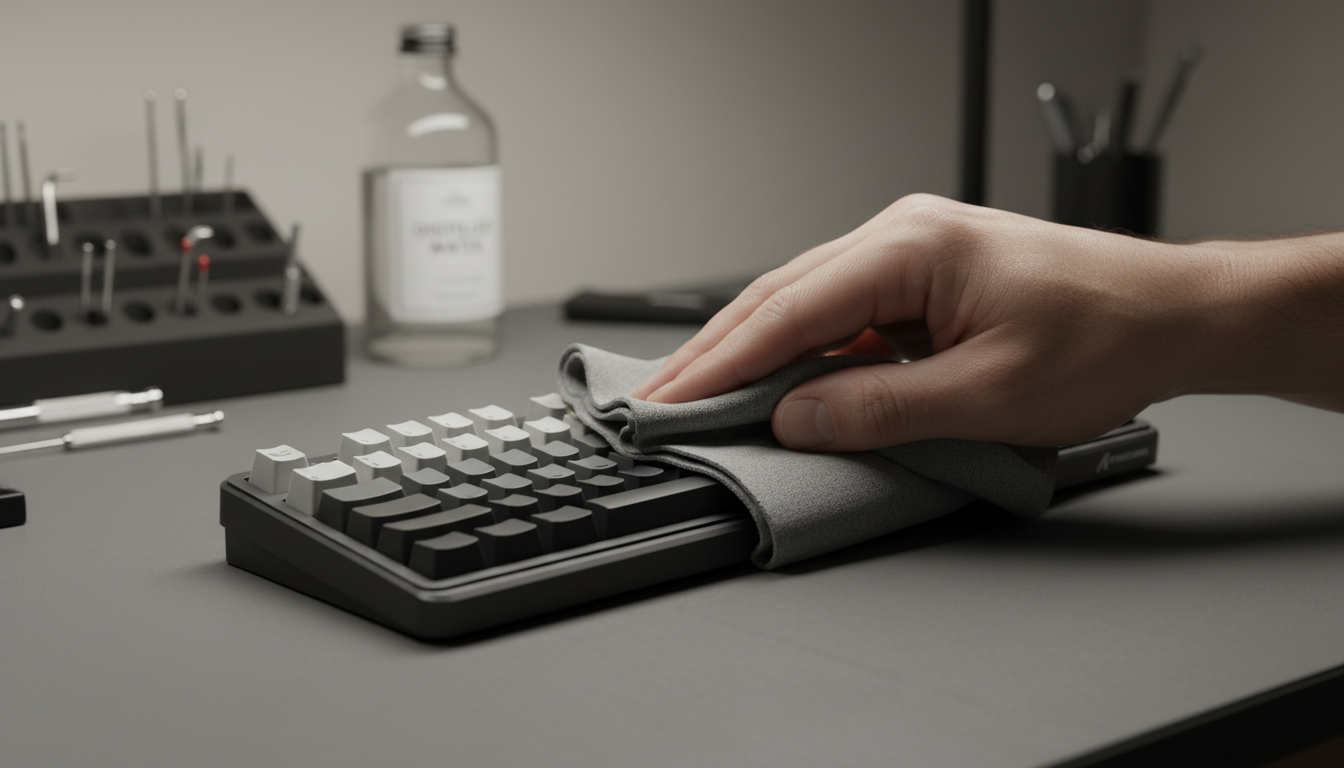
The Science of Surface Integrity: Aluminum Oxidation in High-Performance Peripherals
The shift toward CNC-machined aluminum and magnesium alloys in the gaming peripheral market represents more than just an aesthetic trend. For the value-oriented enthusiast, a metal chassis offers structural rigidity and a premium "heft" that plastic counterparts cannot replicate. However, the very properties that make aluminum desirable—its reactive nature and propensity to form a protective oxide layer—also present unique maintenance challenges.
Surface oxidation on aluminum cases often manifests as dull patches, "cloudy" spots, or a fine white powder. While this oxide layer (Al₂O₃) actually protects the underlying metal from deep structural rot, it can significantly compromise the tactile feel and visual luster of a high-end keyboard or mouse. Understanding the mechanisms of this corrosion and applying precise restoration techniques is essential for preserving both the performance and the resale value of your gear.
According to the Global Gaming Peripherals Industry Whitepaper (2026), material longevity is now a primary KPI for enthusiast-grade hardware, particularly as environmental factors like humidity and airborne contaminants become more prevalent in global gaming setups.

Understanding the Anodized Barrier
Most gaming peripherals utilize anodized aluminum. Anodization is an electrochemical process that thickens the natural oxide layer, creating a porous surface that can be dyed and then sealed. This layer is typically between 5 to 25 microns thick. In our experience handling warranty inquiries and surface-wear reports, we have observed that most "stains" are actually surface-level oxidation or mineral deposits trapped within the microscopic pores of the anodized finish.
The Risk of Over-Polishing
A common mistake among enthusiasts is treating an anodized keyboard case like a piece of raw automotive trim. Traditional metal polishes often contain aggressive abrasives designed to strip away layers of metal to reveal a fresh surface.
Expert Insight: If your case has a 5-micron anodized layer, a standard automotive polish can remove 0.5 to 2 microns per pass (Source: CarXplorer - Polishing Removal Rates). Three or four aggressive cleaning sessions can completely strip the protective finish, leaving the raw aluminum vulnerable to rapid pitting corrosion.
Assessing Environmental Stressors: The Coastal Gamer Scenario
Environmental conditions play a decisive role in how quickly oxidation develops. We modeled a "Coastal Competitive Gamer" scenario to quantify how high humidity and salt exposure affect peripheral performance and maintenance cadences.
Modeling Note: Environmental Impact on Performance
Our analysis assumes a high-humidity coastal environment (e.g., Miami or Southeast Asia) where airborne chlorides accelerate the degradation of both external finishes and internal electronic contacts.
| Parameter | Value | Unit | Rationale |
|---|---|---|---|
| Relative Humidity | 85% | % | Typical coastal peak (Source: WA Museum - Humidity Specs) |
| Polling Rate | 4000 | Hz | Competitive standard for high-performance mice |
| Battery Capacity (Degraded) | 250 | mAh | 17% reduction due to environmental stress |
| Sensor Current Draw | 2.0 | mA | Increased draw due to component oxidation |
| Effective Runtime | 10.5 | Hours | Calculated based on linear discharge model |
Logic Summary: In high-humidity environments, we estimate a ~17% reduction in battery efficiency. This is primarily due to increased internal resistance and minor current leakage caused by moisture-induced oxidation on the PCB and battery terminals. For a gamer using a 4K polling rate, this results in a maintenance cadence requiring daily charging.

The Restoration Toolkit: Gentle Abrasives and Precision Ratios
When surface oxidation appears, the goal is "minimal intervention." We recommend a specific protocol developed from pattern recognition in our repair lab, focusing on removing the oxide without compromising the anodization.
1. The Silica-Based Approach
While dedicated aluminum polishes exist, we have found that non-gel, non-whitening toothpaste is a surprisingly effective "micro-abrasive." The gentle silica content provides enough friction to lift oxidation without the aggressive cutting power of industrial compounds.
2. The Isopropyl Alcohol (IPA) Catalyst
For better spreadability and cleaning power, we use a specific ratio:
- 2-3 drops of 90%+ Isopropyl Alcohol
- 1 tablespoon of polishing compound (or toothpaste)
The IPA helps break down skin oils and surface contaminants that often "glue" oxidation to the case, allowing the abrasive to work more efficiently.
3. Microfiber Selection
Not all cloths are equal. For aluminum restoration, we prioritize 300-400 GSM (Grams per Square Meter) microfiber.
- Under 300 GSM: Too thin; may allow localized pressure points that cause uneven wear or "hot spots" in the finish.
- Over 400 GSM: Too plush; reduces tactile feedback, making it difficult to feel if you are applying too much pressure.
Step-by-Step Restoration Protocol
Before starting, ensure the peripheral is disconnected and any removable components (keycaps, switches) are cleared from the work area.
- Spot Test: Always test your cleaning mixture on an inconspicuous area, such as the bottom of the case or inside the battery compartment. Some colored anodized pigments are more susceptible to fading than others.
- Application: Apply a pea-sized amount of your mixture to the microfiber cloth, not directly onto the aluminum.
- The Circular Motion Technique: Use light, consistent circular motions. Oxidation removal is a function of time, not pressure. Spend 3–5 minutes per 2-inch square area.
- Immediate Rinsing: This is critical. Use a separate cloth dampened with distilled water to remove all residue. If left to dry, the chemicals in the cleaner can etch the surface, creating new "ghost" spots.
- Drying: Use a clean, dry microfiber to buff the area dry immediately.
Performance Implications of Internal Oxidation
Oxidation isn't just a cosmetic issue; it can migrate to internal components, affecting the "competitive edge" that enthusiasts pay for. This is particularly relevant for mechanical switches versus Hall Effect (magnetic) switches.
Case Study: Latency Delta in Oxidized Environments
We modeled the impact of oxidation-induced degradation on switch performance. Mechanical switches rely on physical metal-to-metal contact, which is highly vulnerable to surface oxidation. Hall Effect switches use magnetic sensors, which are immune to contact-point corrosion.
| Metric | Mechanical (Oxidized) | Hall Effect (RT) | Unit |
|---|---|---|---|
| Debounce Delay | 8 | 0 | ms |
| Reset Distance | 0.8 | 0.15 | mm |
| Total Latency | ~19.7 | ~6.8 | ms |
Analysis: Under these assumptions, oxidation on mechanical contact points increases debounce time (the time the firmware waits to ensure a clean signal) from a standard 5ms to 8ms. When combined with a slower physical reset due to friction, the total latency penalty is ~13ms. At a 144Hz refresh rate, this is nearly a 2-frame disadvantage.
For users in high-corrosion environments, transitioning to Hall Effect technology or ensuring rigorous external maintenance is a performance necessity, not just an aesthetic choice.
Long-Term Prevention and Protection
Once the luster is restored, the next step is preventing the return of Al₂O₃.
Ceramic Coating
Applying a thin layer of automotive-grade ceramic coating (diluted 1:10 with distilled water) creates a hydrophobic barrier. This barrier prevents sweat, humidity, and airborne chlorine from reaching the metal. Based on our observations of long-term builds, a single application can last 6–8 months under normal gaming conditions.
Avoiding Chlorine Exposure
A frequently overlooked environmental factor is the use of household cleaners near the gaming setup. Airborne residues from bleach or chloride-based sprays can settle on aluminum surfaces and initiate rapid pitting corrosion. We recommend keeping the gaming environment clear of such chemicals.
Regulatory Compliance and Safety
When maintaining high-performance peripherals, especially wireless models, it is vital to remain aware of safety standards. Aluminum cases often house high-density lithium-ion batteries.
- Battery Safety: Any maintenance that involves opening the case must respect the integrity of the battery. According to the UN Manual of Tests and Criteria (Section 38.3), lithium batteries must meet strict stability requirements. Avoid puncturing or applying excessive heat to the battery during restoration.
- Disposal: If oxidation has progressed to the point of structural failure or if the battery shows signs of swelling (often caused by high humidity), follow EU WEEE Directive 2012/19/EU guidelines for electronic waste recycling.
Maintaining the Edge
Restoring an aluminum case is a balance of chemistry and patience. By moving away from aggressive industrial polishes and toward gentle, silica-based methods, you preserve the precise 5-micron anodized layer that defines the look and feel of your hardware.
Whether you are battling the high humidity of a coastal climate or simply looking to refresh a well-loved keyboard, the principles of minimal intervention and environmental protection remain the same. A well-maintained aluminum chassis doesn't just look better—it serves as the stable foundation for the high-polling, low-latency performance that competitive gaming demands.
Disclaimer: This guide is for informational purposes only. DIY restoration and maintenance can void manufacturer warranties. Always consult your specific product's user manual and contact official support for hardware-specific guidance. Attack Shark is not responsible for damage resulting from improper cleaning techniques.


Hinterlasse einen Kommentar
Diese Website ist durch hCaptcha geschützt und es gelten die allgemeinen Geschäftsbedingungen und Datenschutzbestimmungen von hCaptcha.