

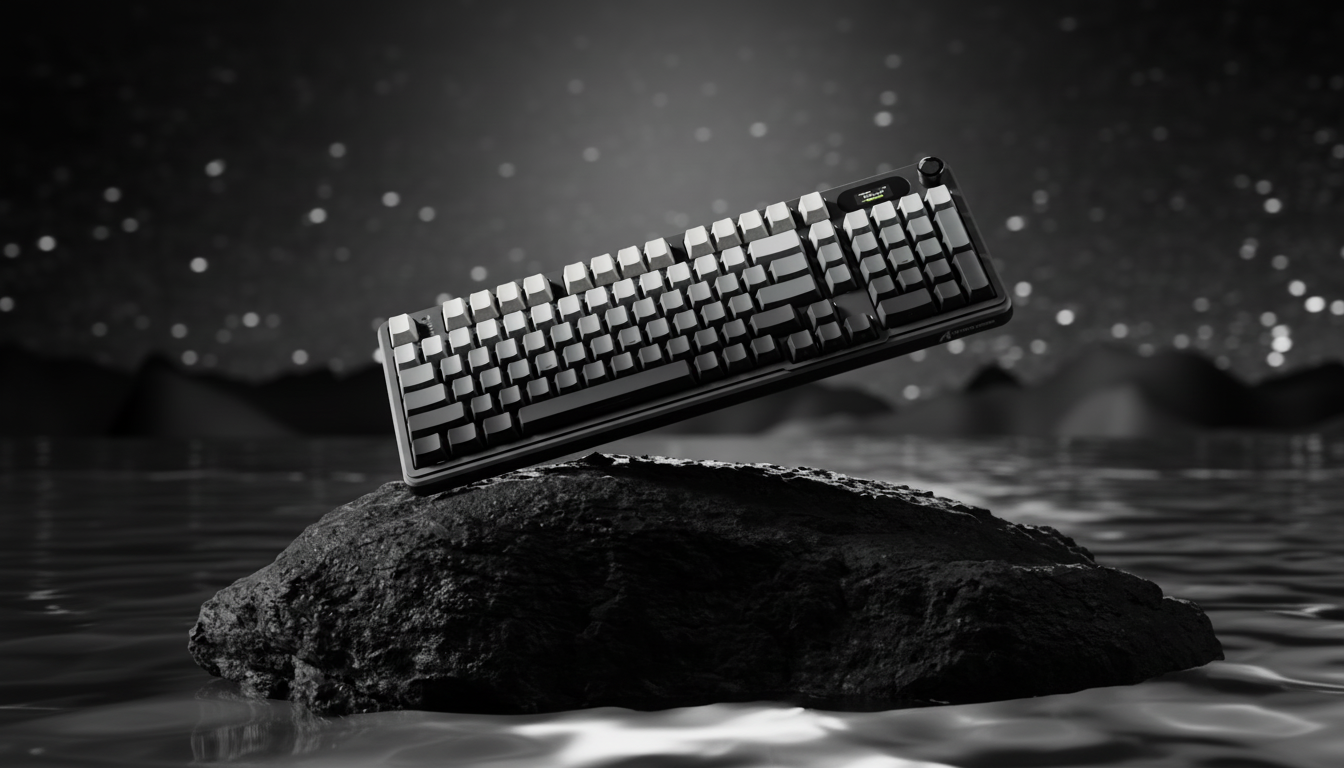
Budget Hall Effect vs. High-End Mechanical: The Great Performance vs. Polish Debate
If you’ve been scrolling through r/MouseReview or watching pro Valorant clips lately, you’ve probably seen the hype. "Rapid Trigger" and "Hall Effect" are the new buzzwords dominating the peripheral scene. For years, the move was simple: if you wanted a "good" keyboard, you saved up for a high-end mechanical board with a heavy aluminum case, lubed switches, and a "thocky" sound profile.
But the landscape has shifted. Challenger brands are now dropping Hall Effect (HE) keyboards at prices that make the old guard look like relics. Suddenly, budget-conscious gamers are facing a brutal choice: do you buy the cutting-edge magnetic switch tech that promises to make you a movement god, or do you stick with a premium, traditional mechanical board that feels like a tank and sounds like a dream?
In our teardown lab and from tracking thousands of customer support tickets, we’ve seen the trade-offs firsthand. It’s not just about the spec sheet; it’s about how that tech actually holds up during a 3:00 AM ranked grind. Let’s dive into the guts of this debate.
The Hall Effect Revolution: Speed at a Price
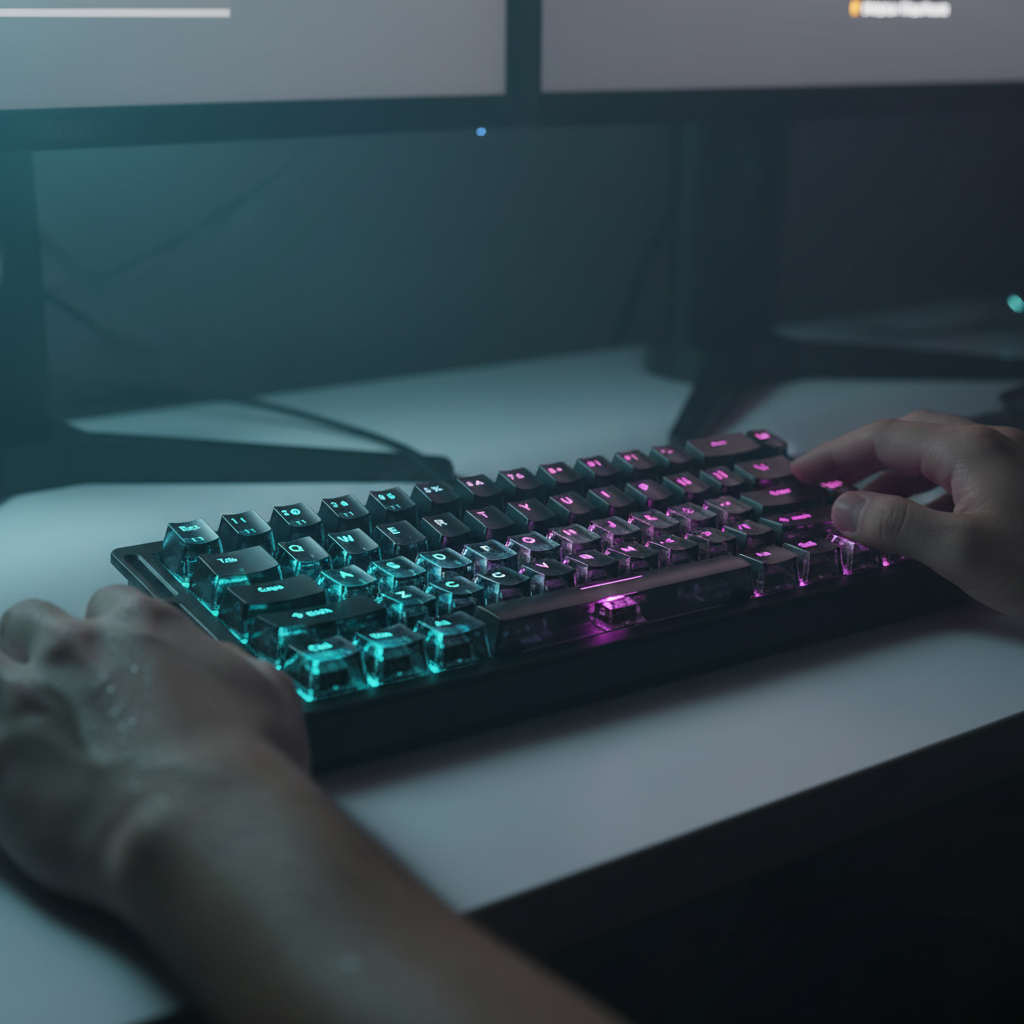
The core of the Hall Effect keyboard is the magnetic switch. Unlike a traditional mechanical switch that relies on physical metal leaves touching to complete a circuit, HE switches use a magnet and a sensor to measure the magnetic field. This allows for features that traditional boards simply can't match.
Actuation Precision and Rapid Trigger
According to WhatGeek, Hall Effect technology allows for extremely precise actuation adjustments, often in increments as fine as 0.1mm. This means you can set your "W" key to trigger the moment you breathe on it (0.1mm) while keeping your "G" key (grenade) at a deep 3.0mm to avoid accidental fat-fingering.
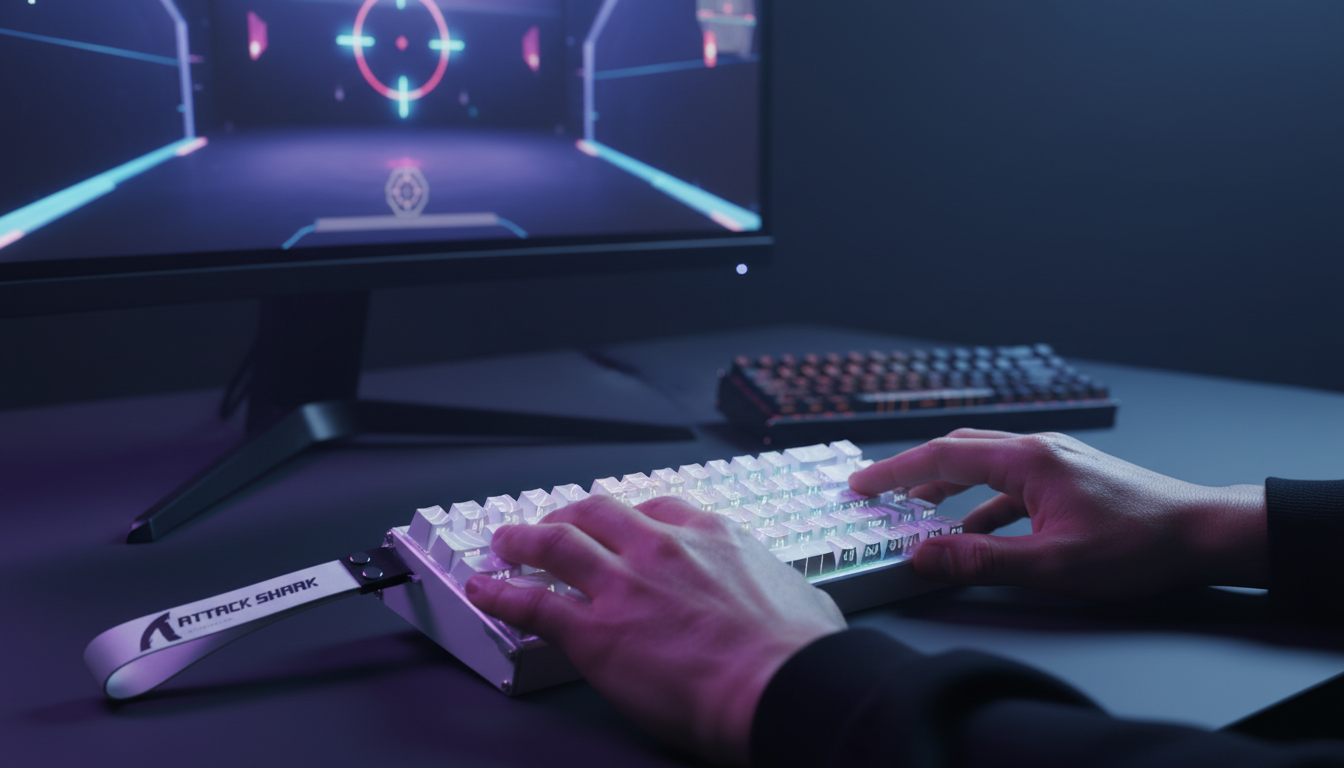
The real game-changer, however, is Rapid Trigger (RT). In a traditional switch, once you press the key, you have to let it travel back up past a fixed "reset point" before you can press it again. In an HE board, the key resets the instant it starts moving upward, even by 0.1mm. For games like Counter-Strike 2 or Valorant, where counter-strafing is life or death, this is a massive advantage.
Logic Summary (Latency Modeling): Based on our scenario modeling for competitive movements (assuming a finger lift velocity of 150mm/s), a Hall Effect board with Rapid Trigger can achieve a total reset latency of ~5.7ms. A standard mechanical board, hampered by a 0.5mm fixed reset distance and a 5ms debounce delay, sits at ~13.3ms. That is a theoretical ~7.7ms advantage for the budget HE board.

The "Budget" Catch: Implementation Matters
While the theoretical advantage is huge, we often see a "budget trap" in the challenger brand space. High-end brands spend months refining their firmware. Budget HE boards often ship with "buggy" rapid trigger algorithms. We’ve observed patterns in community feedback where certain budget boards suffer from "key chatter"—the firmware thinks you’re spamming a key when you’re just holding it—or inconsistent reset points.
As noted by RTINGS, the quality of the Rapid Trigger implementation is just as important as the hardware itself. A stable 1ms polling rate on a well-tuned mechanical board is often more valuable than a buggy 8KHz implementation on a budget HE board.
High-End Mechanical: The Case for Craftsmanship
If budget HE boards win on raw speed, high-end mechanical boards win on experience. When we talk about "high-end," we’re usually looking at CNC-machined aluminum chassis, gasket mounting systems, and multi-layer sound dampening.
Build Quality and Durability
A plastic tray-mounted HE board might feel hollow or "pingy." In contrast, metal keyboards offer significantly more durability and a "planted" feel on the desk. According to Keychron, metal cases provide a premium weight that prevents the keyboard from sliding during intense sessions.
From a technical standpoint, high-end boards use Gasket Mounts. Instead of screwing the PCB directly to the case (tray mount), the internals "float" between rubber gaskets. This creates a consistent, cushioned typing feel across every single key.
The Science of "Thock"
Enthusiasts obsess over acoustics for a reason. A high-end mechanical board uses materials like Poron foam and IXPE switch pads to filter out high-frequency noise.
| Component | Acoustic Function | Frequency Impact |
|---|---|---|
| Aluminum Case | Rigid structure | High-frequency resonance (needs dampening) |
| PC/FR4 Plate | Low-pass filter | Shifts pitch down (<500Hz "Thock") |
| Poron Foam | Viscoelastic damping | Attenuates mid-highs (1kHz - 2kHz) |
| IXPE Pad | Transient emphasis | Creates "creamy" or "poppy" sound |
Logic Summary (Acoustic Modeling): We categorize "Thock" as low-frequency sounds below 500Hz and "Clack" as high-frequency sounds above 2000Hz. Budget HE boards typically land in the "Clack" zone due to their plastic construction and lack of internal dampening, which can be fatiguing during long coding or gaming sessions.
Ergonomics and Long-Term Health
Whether you choose HE or Mechanical, how you use it matters. We modeled a scenario for a typical competitive gamer ("Alex") who spends 20 hours a week gaming and 40 hours a week coding.
Using the Moore-Garg Strain Index, we calculated a score of 13.5 for this workload. In ergonomic terms, any score over 5 is considered "hazardous." This high score is driven by high APM (actions per minute) and suboptimal wrist posture during intense gaming.
While no keyboard "fixes" a bad setup, high-end mechanical boards often offer a more refined typing feel that can reduce the perception of fatigue. However, if you are a value-oriented gamer, the performance gain of HE might outweigh the "feel" of a premium mechanical board.
Methodology Note (Strain Modeling):
- Model Type: Deterministic Moore-Garg Strain Index calculation.
- Parameters: Intensity (1.5x), Duration (0.5x), Efforts/Min (4x), Posture (1.5x), Speed (2x), Duration/Day (1.5x).
- Boundary: This is a risk screening tool, not a medical diagnosis. Individual risk varies based on break frequency and desk height.

The Decision Matrix: Which One Fits Your Setup?
To help you decide, we’ve broken down the choice based on your primary use case.
Scenario A: The Competitive FPS Grinder
If your main goal is climbing the ranks in Valorant, Apex Legends, or CS2, the Budget Hall Effect is the clear winner. The ~8ms latency advantage and the ability to set a 0.1mm actuation point are tangible performance gains. Even if the software is a bit clunky, the hardware advantage in movement-heavy games is hard to ignore.
- Priority: Speed and Rapid Trigger.
- Trade-off: Plastic build, potentially buggy software, "clackier" sound.
Scenario B: The Hybrid Gamer/Creator
If you spend your days coding, writing, or editing and your nights gaming, the High-End Mechanical board is usually the better investment. After the novelty of adjustable actuation wears off, most users settle on a single setting. At that point, you’ll value the superior acoustics, the gasket-mounted comfort, and the long-term reliability of established mechanical switches.
- Priority: Build quality, typing feel, and acoustics.
- Trade-off: Higher price, fixed actuation points, slightly higher latency (~13ms).
The "70/30" Budget Rule
A common heuristic we use for budget-conscious gamers is the 70/30 rule: Allocate 70% of your peripheral budget to your mouse and 30% to your keyboard. Why? Because mouse performance has a much more direct impact on your aim. A $50 budget HE keyboard paired with a top-tier $100 mouse will almost always outperform a $150 premium keyboard paired with a $20 budget mouse.
Trust, Safety, and Compliance
When buying from challenger brands in the budget HE space, you need to look for trust markers. Because these devices use wireless 2.4GHz and Bluetooth tech, they must comply with international standards.
- FCC ID: You can verify a brand's legitimacy by searching their Grantee Code on the FCC Equipment Authorization site.
- Battery Safety: Budget boards often use lithium-ion batteries. Ensure the product has UN 38.3 certification for safe transport and usage, as outlined in the IATA Lithium Battery Guidance.
- Software Security: Always run driver downloads through VirusTotal before installing. Unsigned drivers from smaller brands can occasionally trigger false positives or, in rare cases, pose security risks.
Pro-Tips for Your Setup
- Don't Over-Tune: On HE boards, setting every key to 0.1mm often leads to accidental inputs. We recommend 0.2mm - 0.5mm for your movement keys (WASD) and 1.5mm+ for everything else.
- Foam Modding: If you buy a budget HE board and hate the sound, a simple "Tape Mod" or adding a layer of cheap packing foam inside the case can drastically improve the acoustics for under $5.
- Firmware Updates: Always check the official Attack Shark Driver Page or your specific brand's support site immediately after unboxing. Early firmware often has the most bugs.
- Wired is King for HE: While many budget HE boards offer "Tri-mode" (2.4G/BT/Wired), Hall Effect sensors are power-hungry. For the lowest latency and most stable Rapid Trigger performance, we recommend staying in wired mode during competitive play.
Final Verdict
The "best" choice depends on your definition of value. If value means "the most performance per dollar for winning games," go with a Budget Hall Effect board like those featured in our Rapid Trigger Mechanics Guide. If value means "a tool that will last five years, feel amazing every day, and hold its resale value," the High-End Mechanical board is the endgame.
Choosing between the two is a win-win for gamers. We are living in a golden age of peripherals where even "budget" options are outperforming the pro gear of five years ago. Just remember: the gear helps, but the grind is what actually gets you to Radiant.
Disclaimer: This article is for informational purposes only. Performance metrics are based on theoretical modeling and typical industry observations. Individual results may vary based on hardware implementation, system configuration, and user skill level. Always consult official manufacturer documentation for safety and warranty information.

Hinterlasse einen Kommentar
Diese Website ist durch hCaptcha geschützt und es gelten die allgemeinen Geschäftsbedingungen und Datenschutzbestimmungen von hCaptcha.