


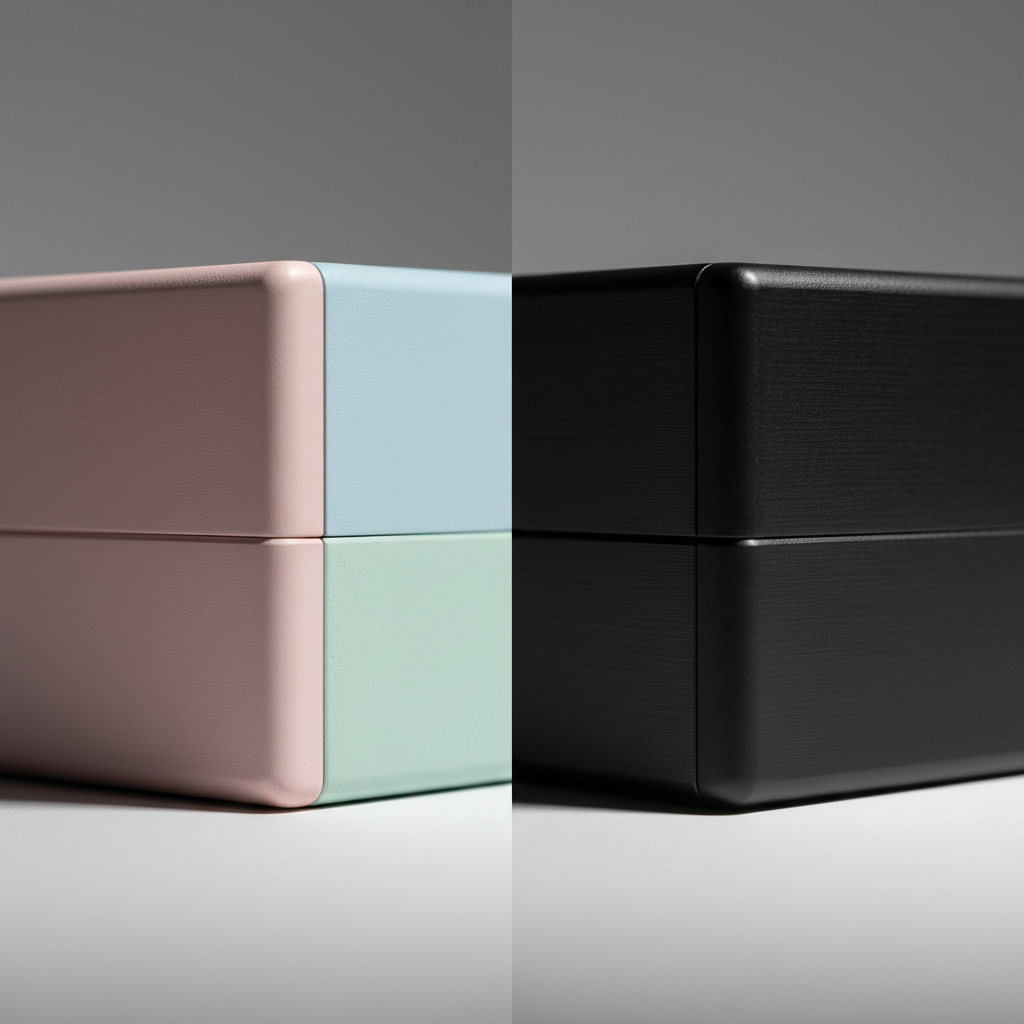
Understanding Surface Science: Cerakote vs. Anodizing for Premium Aluminum Hardware
In the high-stakes world of custom mechanical keyboards and precision gaming peripherals, the "feel" of a device is governed as much by its surface chemistry as its internal switch architecture. For enthusiasts investing in CNC-machined aluminum chassis, the choice between Anodizing and Cerakote represents a fundamental decision in material science. While both offer protection and aesthetic appeal, they operate on entirely different mechanical principles.
Anodizing is an electrochemical conversion process that transforms the surface of the aluminum itself into a hard, porous oxide layer. In contrast, Cerakote is a specialized ceramic-polymer composite coating that is applied to the substrate. Choosing between them requires a deep understanding of durability, thermal management, and the specific "gotchas" of the application process.
The Mechanism of Anodizing: Surface Conversion
Anodizing is the industry standard for a reason. By immersing an aluminum part in an acid electrolyte bath and passing an electric current through it, the surface is oxidized. This isn't a layer "on top" of the metal; it is the metal itself, reorganized into a hexagonal porous structure.
According to the Aluminum Anodizers Council, this oxide layer is integral to the substrate, meaning it cannot peel or flake. However, its extreme thinness—typically ranging from 0.0001 to 0.001 inches—makes it a "eggshell" finish. While the surface hardness is high (approaching the hardness of sapphire), the thin layer offers little impact resistance. A sharp strike can deform the soft aluminum underneath, causing the brittle oxide layer to crack or "craze."
Key Specs: Anodizing Roughness (Ra)
In our experience with precision-machined cases, the final texture is highly dependent on the initial surface roughness (Ra). A standard 2B finish (Ra 0.3-1 µm) must be maintained during the pre-anodizing polish. As noted in industry benchmarks regarding polishing aluminum, reducing surface roughness by as little as 40% can push a technical component out of tolerance, potentially affecting the fitment of tight-tolerance gaskets or hot-swap PCB assemblies.
The Mechanism of Cerakote: Ceramic-Polymer Matrix
Cerakote has gained massive popularity in the modding community for its vibrant color palette and superior damage tolerance. It is a "thin-film" coating, but at 0.0005 to 0.001 inches, it is significantly thicker than most anodized layers.
The secret to Cerakote’s performance is its composite nature. It combines the hardness of ceramics with the flexibility of a polymer matrix. This allows the finish to absorb energy. Where an anodized surface might crack upon impact, Cerakote is more likely to dent alongside the aluminum, maintaining the seal over the substrate.
Expert Observation: We have observed that surface preparation is 90% of the Cerakote result. Media blasting to a consistent "anchor profile" is non-negotiable for adhesion. If the substrate is not properly etched, the coating will eventually delaminate under the constant friction of a gamer’s palms.

Technical Comparison: Performance Data
For value-driven enthusiasts, the choice often comes down to specific mechanical trade-offs. The following table compares the two finishes based on common industry heuristics and material data.
| Feature | Anodizing (Type II/III) | Cerakote (H-Series) | Practical Impact |
|---|---|---|---|
| Thickness | 0.0001" – 0.0005" | 0.0005" – 0.001" | Cerakote can "tighten" tolerances in screw holes. |
| Surface Hardness | 60-70 Rockwell C | 7H - 9H (Pencil Hardness) | Anodizing is harder but more brittle. |
| Thermal Conductivity | High (Metallic) | Low (Insulative) | Anodizing feels "colder" to the touch. |
| Color Accuracy | High (Metallic Luster) | Exceptional (Solid/Matte) | Cerakote is superior for pastels and bright reds. |
| Repairability | Zero (Requires Stripping) | Moderate (Local Re-spray) | Anodizing damage is permanent without a full rebuild. |
The "Annealing Gotcha": A Hidden Risk in Cerakote Curing
One of the most significant, yet rarely discussed, risks of Cerakote is the curing temperature. Most H-Series Cerakote requires a bake at 250°F to 300°F (121°C to 148°C) for several hours. While this seems low, it can have a deterministic impact on the mechanical properties of high-grade aluminum alloys like 6061-T6 or 7075-T6.
According to research on aluminum heat treatment, sustained exposure to temperatures above 250°F can initiate "over-aging" or annealing. This process accelerates the coarsening of strengthening precipitates within the metal.
- Result: A potential 10-25% loss in tensile yield strength.
- Implication: While a keyboard chassis isn't a structural aircraft wing, a softened 7075 alloy case may be more prone to stripping threads or warping over time if subjected to high-tension screw-in stabilizers or aggressive modding.
High-Performance Modeling: The Competitive Gamer Perspective
To understand how these finishes affect actual usage, we modeled the performance requirements of a "Competitive FPS & Rhythm Gaming" persona. This user utilizes a high-polling rate environment (8000Hz) and high-APM (Actions Per Minute) inputs.
Scenario Modeling: Performance & Ergonomics
Modeling Note: This analysis assumes a high-intensity gaming profile (300+ APM) on a 4K display. This is a deterministic scenario model, not a controlled laboratory study.
| Parameter | Value | Unit | Rationale |
|---|---|---|---|
| Min. DPI (4K Display) | ~2,750 | DPI | Nyquist-Shannon limit to avoid pixel skipping. |
| HE Rapid Trigger Advantage | ~8 | ms | Latency delta vs. standard mechanical reset. |
| Wireless Runtime (4K Polling) | ~22 | hours | Estimated discharge for 500mAh battery. |
| Strain Index (High APM) | 64 | Score | Classified as "Hazardous" (Baseline > 5). |
Why Surface Finish Matters for 8K Performance
In the context of the Global Gaming Peripherals Industry Whitepaper (2026), precision is everything. To saturate an 8000Hz (8K) polling rate, a user must move at a specific speed to generate enough data packets. For example, at 1600 DPI, a movement of only 5 IPS (inches per second) is required to maintain the 0.125ms reporting interval.
The surface finish of the mouse or keyboard-mounted accessories directly impacts this. Anodized surfaces, being smoother and more "metallic," can become slippery with sweat, leading to micro-slips during the fast micro-adjustments needed for 8K tracking. Cerakote, with its matte, slightly porous ceramic texture, often provides superior "dry grip," which is critical for maintaining the stable 5+ IPS movement required for 8K sensor saturation.
Common Modding Pitfalls: Edge Rounding and Thickness
A common mistake in the DIY community is applying Cerakote too thickly. Because it is a sprayed coating, it tends to "pool" at the base of sharp edges.
- The "Soft Edge" Effect: Excessive coating rounds off the crisp CNC-machined lines of a premium keyboard case, leading to a "plastic" look.
- Chipping Risk: Thick coats are more prone to chipping at sharp corners. Experienced applicators use multiple "dust coats"—thin, translucent layers—before a final wet coat to ensure the geometry of the metal is preserved.
Thermal Management and Comfort
There is a persistent myth that Cerakote acts as a thermal blanket, causing keyboards to "overheat." While Cerakote is an insulator, the thermal conductivity of aluminum is so high that a 1-mil layer of ceramic has a negligible impact on the heat dissipation of the internal PCB.
However, the subjective experience is real. Anodized aluminum has high thermal effusivity—it pulls heat away from your skin rapidly, making the board feel "ice cold" in winter. Cerakote's polymer-ceramic matrix slows this heat transfer, making the keyboard feel more neutral and comfortable during long sessions.
Maintenance and Long-Term Care
Regardless of the finish, aluminum hardware requires specific maintenance to avoid "shining" (where skin oils and friction polish the matte texture over time).
- Anodizing: Highly resistant to chemicals but susceptible to "acid sweat" which can etch the dye over years. Clean only with pH-neutral soap.
- Cerakote: Extremely chemically resistant (it is designed for firearms). It handles aggressive cleaning better than anodizing but can be scratched by hard objects (like metal watch bands).
- Dust Management: For both finishes, micro-scratches from dust are the primary enemy. Using a clear acrylic dust cover when the board is not in use can extend the "factory matte" look by years.
Summary of Choice
For the purist who wants the "true metal" feel and the highest possible surface hardness, Anodizing remains the gold standard. It preserves the sharpest CNC details and offers that classic metallic luster.
For the modder who prioritizes color customization, grip texture, and impact resistance—and who is aware of the curing temperature risks—Cerakote is a superior alternative. It transforms the aluminum into a more durable, "warm" instrument that stands up better to the rigors of high-APM gaming.
Disclaimer: This article is for informational purposes only. Modifying hardware through chemical or thermal processes (like anodizing or Cerakote curing) can void manufacturer warranties and, if done incorrectly, may alter the structural integrity of the components. Always consult with professional applicators.

Hinterlasse einen Kommentar
Diese Website ist durch hCaptcha geschützt und es gelten die allgemeinen Geschäftsbedingungen und Datenschutzbestimmungen von hCaptcha.