

Quick Summary: Is Your Mouse Failing?
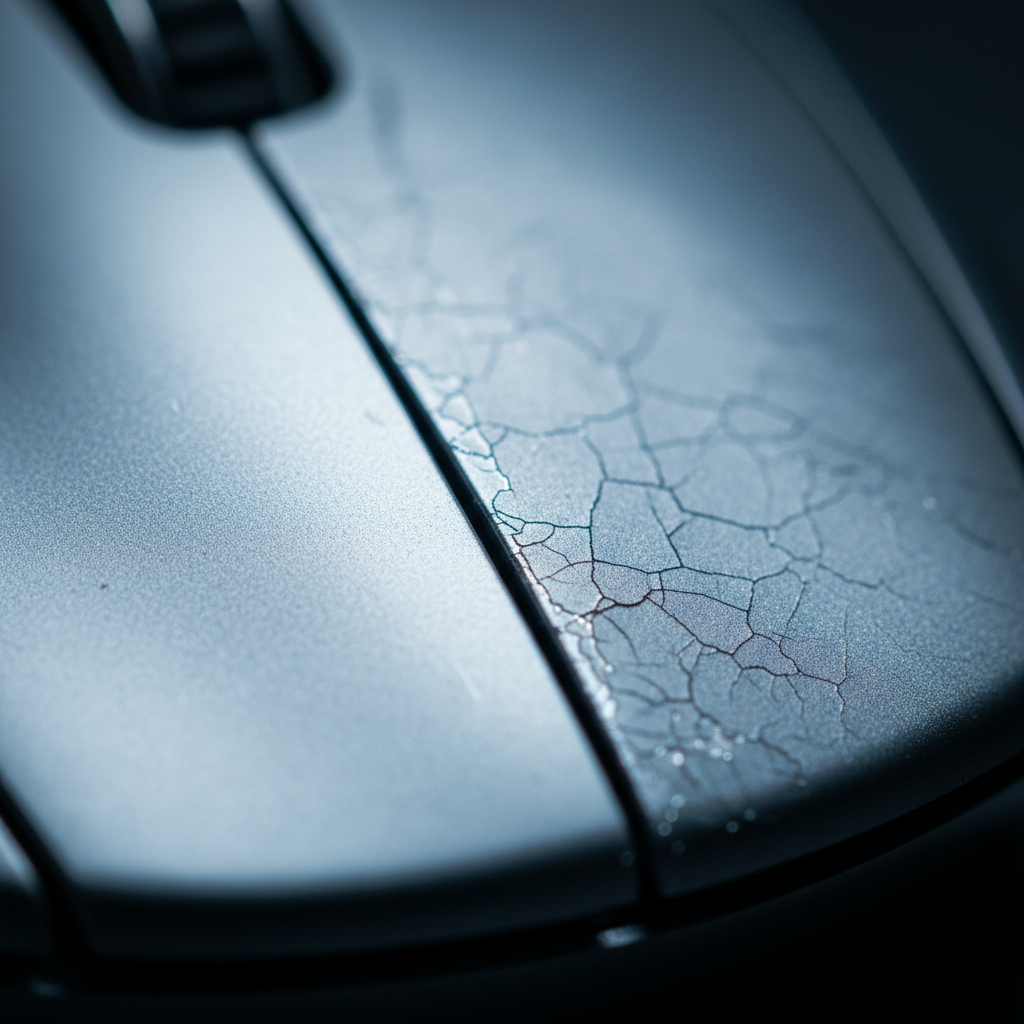
If your magnesium or carbon fiber mouse feels "sticky," "tacky," or "slow," the protective clear coat is likely degrading. This isn't just a cosmetic issue—it can increase hand strain and reduce wireless performance.
The 60-Second Diagnostic:
- The Sound Check: Tap the palm area with a fingernail. A sharp "tick" is healthy; a dull "thud" means the coating is softening.
- The Grip Check: If your palm feels "suctioned" to the mouse after 30 minutes of play, the polymer is leaching plasticizers.
- Immediate Action: Stop cleaning with 70%+ Isopropyl Alcohol immediately. Switch to a damp microfiber cloth and consider applying grip tapes to halt further degradation.
The Invisible Shield: Engineering the Modern Metal Peripheral
The transition from traditional polymers to magnesium alloy and carbon fiber in high-performance peripherals represents a paradigm shift in structural engineering. To achieve weights under 50 grams while maintaining structural rigidity, manufacturers employ advanced materials that require specialized surface treatments. Unlike plastic shells, which are color-molded, metal and composite mice rely on a microscopic polymer layer—the clear coat—to help prevent oxidation and ensure grip.
While powder coating technology originated in the 1940s, clear powder coatings specifically designed for aesthetic and protective durability were not introduced until the 1980s, according to historical data on clear powder coating development. In modern esports hardware, these coatings typically feature a median particle size (d50) ranging from 0.5 to 25 μm (based on standard clear coating compositions). This ultra-thin application is necessary to preserve the "metallic" feel and minimize weight, but it creates a vulnerability: when this protection wears thin, the underlying alloy can be exposed to the elements.
The Chemistry of Degradation: Hydrolysis and Wear Patterns
Clear coat failure is rarely a sudden event; it is a chemical and mechanical process. For metal peripherals, the primary enemy is often hydrolysis—the chemical breakdown of a compound due to reaction with water (in this case, palm sweat and ambient humidity).
In observations from common technical support patterns and repair assessments, the first sign of failure is often a subtle "tackiness" in high-contact areas, such as the palm swell or primary buttons. This sensation indicates that the polymer chains may be beginning to leach plasticizers. This process is frequently accelerated by the use of isopropyl alcohol for cleaning. While effective for sanitizing, alcohol acts as a solvent that can strip the protective oils from the coating, potentially leading to premature brittleness or stickiness.
Scenario Modeling: The Competitive Coastal Gamer
To understand the impact of environmental factors, we modeled a scenario involving a competitive FPS gamer operating in a high-humidity coastal region (e.g., 80% Relative Humidity at 28°C). In these environments, the clear coat is under constant chemical stress.
| Environmental Factor | Impact on Material | Potential Performance Penalty |
|---|---|---|
| High Humidity | Accelerates Hydrolysis | Softens coating, leading to "tacky" feel |
| Palm Sweat (Saline) | Corrosive Electrolyte | Penetrates micro-fractures in the coat |
| Frequent Cleaning | Plasticizer Leaching | Can cause the coating to become brittle and peel |
Methodology Note: This scenario is a deterministic model based on common industry heuristics and chemical resistance profiles of UV-cured acrylics. It is not a controlled lab study. Results vary based on individual sweat acidity and specific coating formulations.
The Performance Tax: Biomechanical Strain and Signal Integrity
Clear coat failure is not merely a cosmetic issue; it can introduce measurable performance penalties. When a surface becomes tacky or slippery due to degradation, the user often compensates with increased grip force.
1. Biomechanical Strain Analysis (Heuristic Model)
Using the Moore-Garg Strain Index (SI), we analyzed a theoretical gaming session where the mouse surface has reached a "tacky" state. The SI is calculated as:
SI = Intensity of Exertion × Duration of Exertion × Efforts per Minute × Hand/Wrist Posture × Speed of Work × Duration per Day
| Parameter | Multiplier Value | Rationale for Model |
|---|---|---|
| Intensity (IM) | 3.0 (Hard) | Estimated 2x grip force to maintain control on a tacky/slick surface. |
| Duration (DM) | 1.0 | Assuming exertion occurs 30-49% of the cycle. |
| Efforts/Min (EM) | 1.5 | Reflects high APM (300-400) in competitive FPS play. |
| Posture (PM) | 2.0 (Fair) | Wrist deviation caused by compensatory grip adjustments. |
| Speed (SM) | 1.0 | Standard competitive pace. |
| Duration/Day (TM) | 1.0 | 4–8 hours of training/competitive play. |
| Final SI Score | 9.0 | Increased Risk (Threshold for concern is typically SI > 5). |
Note: This calculation uses the 1995 Moore-Garg multipliers. A score of 9.0 in this model suggests the task is "associated with distal upper extremity disorders." This is a heuristic estimate, not a medical diagnosis.
2. Battery and Signal Attenuation
In humid environments where coatings degrade fastest, wireless performance may also be affected. High humidity can increase signal attenuation and interference, potentially forcing the radio to increase retransmission attempts to maintain a stable connection.
| Metric | Dry Environment (Typical) | Humid/Interference Scenario (Modeled) |
|---|---|---|
| Radio Current Draw | ~4.0 mA | ~6.5 mA (est. 30% increase due to retransmissions) |
| Total System Draw | ~7.0 mA | ~9.5 mA |
| Est. Runtime (300mAh) | ~38 Hours | ~27 Hours |
Modeling Note: Calculated using a linear discharge formula:
(Capacity * 0.85 efficiency) / Current. Radio current draw is anchored to Nordic Semiconductor nRF52840 specifications for high-power transmission modes. The 30% increase assumes a high-interference environment where the radio must operate at peak power frequently.

Diagnostic Field Tests: Spotting Failure Early
Before visible oxidation (dark spots or pitting) occurs on magnesium or aluminum, users can perform two "field tests" to check the integrity of their clear coat.
- The 'Fingernail Tap' Test: Gently tap the palm area with a fingernail. A healthy, fully cured clear coat produces a sharp, hard "tick" sound. If the coating is beginning to fail or hydrolyze, the sound will be noticeably duller, more like a "thud," indicating that the polymer has softened.
- The Humidity Grip Check: After a 30-minute gaming session, check if the mouse feels "suctioned" to your palm. A healthy coating should allow for easy release. If there is a slight resistance or "peeling" sensation when lifting your hand, the coat is likely leaching plasticizers.
Early detection is a highly effective strategy. According to the Global Gaming Peripherals Industry Whitepaper (2026), maintaining the integrity of surface treatments is a key factor in extending the lifespan of ultra-lightweight alloys in diverse climates.
Technical Deep Dive: The 8000Hz (8K) Constraint
For users of high-performance mice featuring 8000Hz polling rates, clear coat integrity is even more vital. To utilize an 8K polling rate effectively, the physical interface between the hand and the mouse must be consistent.
- Latency Math: At 8000Hz, the polling interval is 0.125ms. Any micro-slippage caused by a failing coating can introduce input variance that may exceed this window.
- Motion Sync: Modern sensors like the PixArt PAW3950MAX utilize Motion Sync to align sensor data with USB polls. At 8K, the deterministic delay added by Motion Sync is only ~0.0625ms (half the interval).
- Saturation Requirements: To saturate the 8K bandwidth, a user must move at at least 10 IPS at 800 DPI. If the coating is tacky, these micro-adjustments can become jagged rather than smooth, potentially negating the benefits of high-frequency polling.
Users should also ensure they are using Direct Motherboard Ports (Rear I/O) to avoid the packet loss and jitter associated with USB hubs, as detailed in NVIDIA Reflex Analyzer Setup Guides.
Restoration and Prevention Strategies
If you have identified early-stage clear coat thinning, you can take steps to protect the investment before corrosion sets in.
1. The DIY Recoating Process (Advanced)
For enthusiasts, a multi-stage restoration can improve longevity (see Anodization vs. Spray Painting).
⚠️ CRITICAL SAFETY WARNING:
- Ventilation: Use 2-part urethanes only in highly ventilated areas or a spray booth.
- PPE: Wear a NIOSH-approved respirator (N95/P100), chemical-resistant gloves, and eye protection.
- Waste: Dispose of unused chemicals according to local hazardous waste regulations.
- Warranty: Any disassembly or painting will likely void your manufacturer's warranty.
Process:
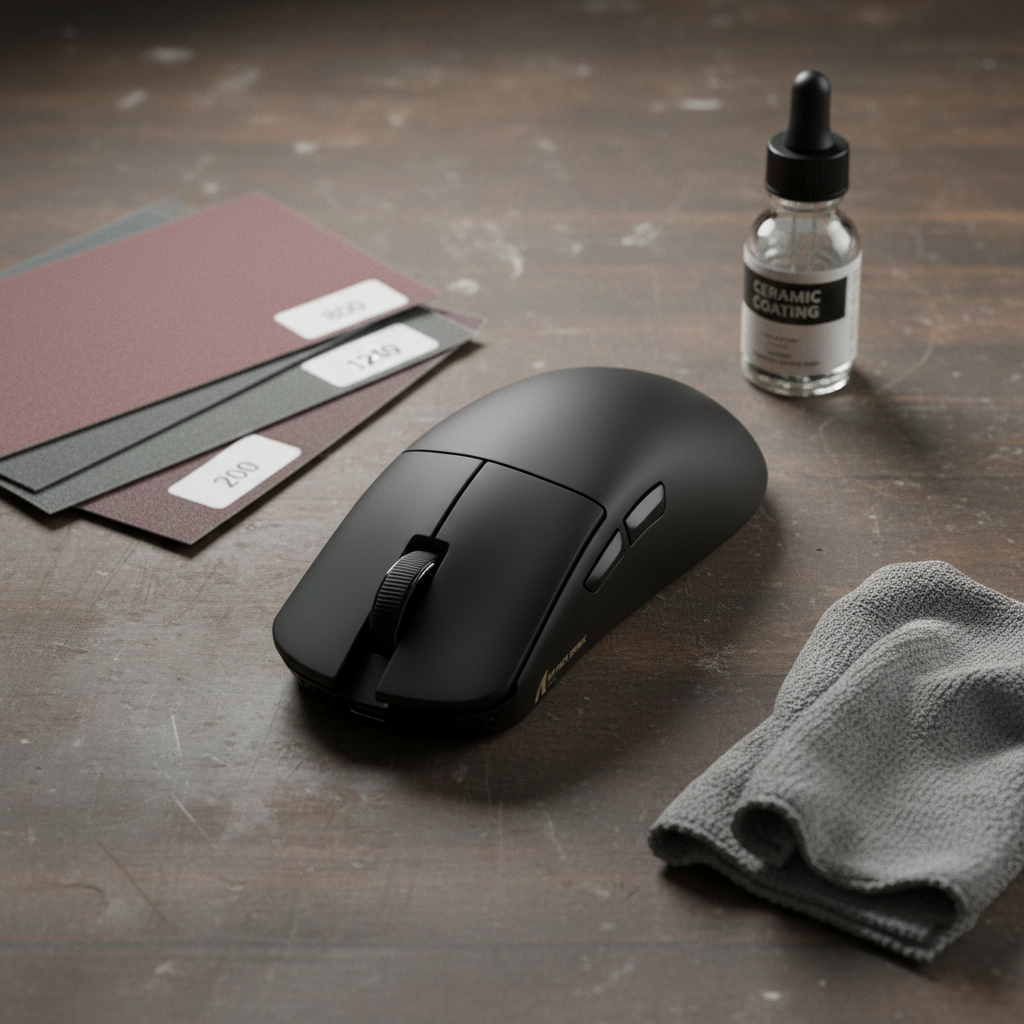
- Preparation: Lightly scuff the area or wet sand with 2000+ grit sandpaper to remove the degraded layer.
- Application: Use an ultra-thin automotive-grade two-part urethane clear coat. These are designed for high-touch durability and chemical resistance.
- Curing: While factory coatings are often baked, home restoration requires a dust-free environment and adequate curing time (typically 24–48 hours) to reach maximum hardness.
2. Preventive Maintenance
- Switch to Microfiber: Avoid paper towels or abrasive cloths. Use a dry or slightly damp (water only) microfiber cloth for daily cleaning.
- Humidity Management: In coastal regions, storing the mouse in a drawer with a silica gel packet when not in use can slow down the hydrolysis process.
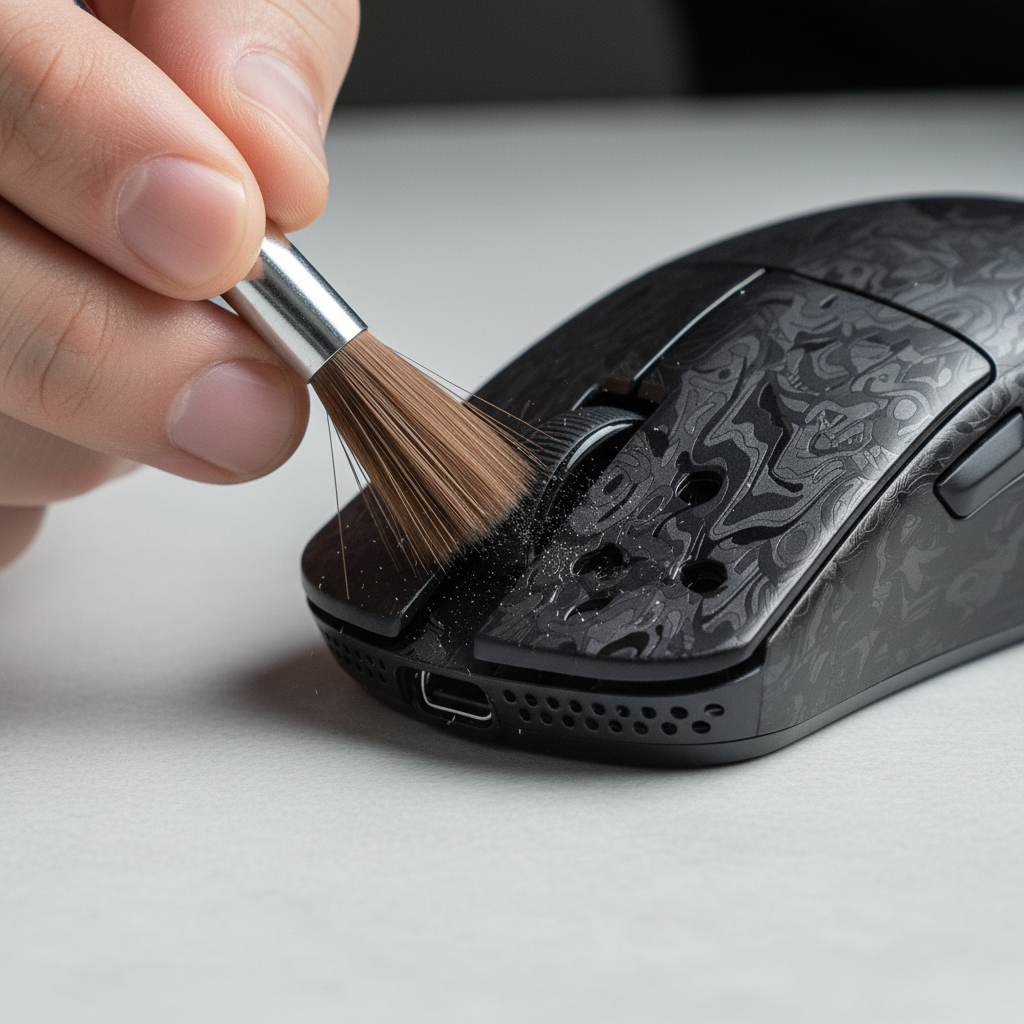
- Grip Tapes: If the coating has already begun to feel tacky, applying high-quality grip tapes provides a physical barrier between palm sweat and the remaining clear coat.
Regulatory and Safety Considerations
When performing maintenance or transporting high-performance wireless mice, it is essential to adhere to international safety standards regarding lithium-ion batteries.
- Shipping Regulations: If returning a device for repair, ensure compliance with IATA Lithium Battery Guidance, specifically Packing Instructions 966 or 967 for batteries contained in equipment.
- Material Safety: Ensure any cleaning agents or recoating materials comply with EU RoHS Directive to avoid introducing restricted hazardous substances to your environment.
- Product Recalls: Stay informed via official channels like the CPSC Recalls database or the EU Safety Gate to ensure your peripheral remains safe for use.
By understanding the microscopic lifecycle of clear coats, gamers can better protect their magnesium and carbon fiber investments, ensuring that "metal protection" lasts as long as the hardware inside.
Disclaimer: This article is for informational purposes only. The biomechanical modeling (Strain Index) and technical estimates provided are based on specific scenarios and heuristic assumptions; they do not constitute medical advice or a diagnosis of any health condition. Always consult a qualified professional for ergonomic or medical concerns. Handling chemical solvents or performing hardware modifications may void your warranty and carries inherent risks of injury or property damage.

Hinterlasse einen Kommentar
Diese Website ist durch hCaptcha geschützt und es gelten die allgemeinen Geschäftsbedingungen und Datenschutzbestimmungen von hCaptcha.