


The Engineering of the Gasket Mount: Precision Beyond the Spec Sheet
In the mechanical keyboard industry, "gasket mount" has transitioned from a niche enthusiast modification to a standard requirement for premium builds. However, as the market becomes saturated with gasket-mounted chassis, a technical "Specification Credibility Gap" has emerged. While many manufacturers claim to offer a flexible typing experience, the actual sensation often varies significantly between units. The differentiator is not the presence of gaskets, but the precision of the CNC-milled gasket seats that house them.
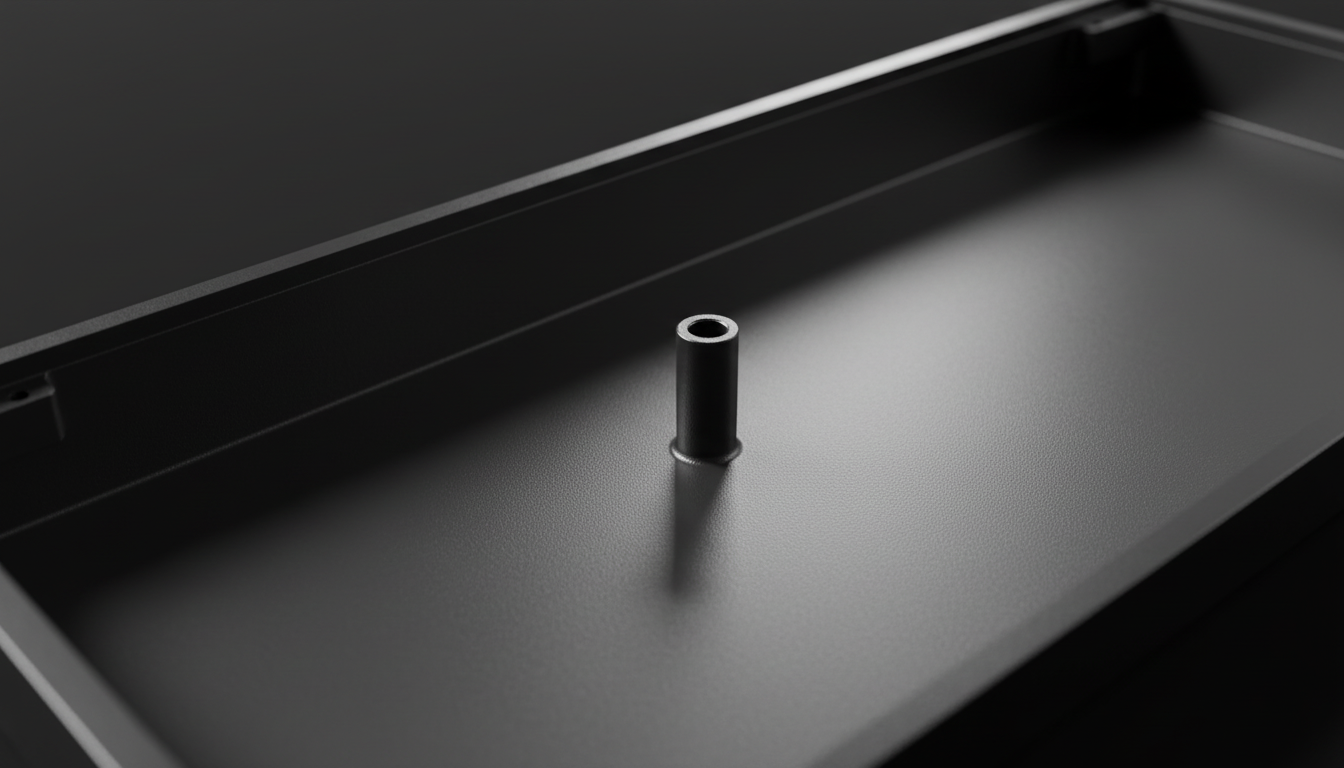
The relationship between the chassis geometry and the typing feel is governed by strict mechanical tolerances. In a high-end keyboard, the gasket seat is the interface where the internal assembly (the PCB and plate) meets the external enclosure. Even a minor deviation in the depth or alignment of these seats can fundamentally alter the keyboard's acoustic profile and tactile response. Understanding the mechanics of CNC (Computer Numerical Control) machining and its impact on gasket compression is essential for enthusiasts seeking a consistent, high-performance typing experience.

CNC Machining vs. Traditional Casting: The Tolerance Threshold
The primary reason enthusiasts prioritize CNC-machined aluminum over die-cast alternatives is the control over tolerances. Die-casting involves injecting molten metal into a mold, a process prone to thermal contraction and warping as the metal cools. This often results in "draft angles" and surface irregularities that make it difficult to achieve a perfectly flat mounting surface.
In contrast, CNC machining carves the chassis from a solid block of 6061 or 6063 aluminum. Modern CNC mills can maintain tolerances as tight as ±0.05mm (based on standard high-precision milling capabilities). This level of accuracy is critical for gasket seats. For example, a variance of just 0.1mm in gasket seat depth across the chassis can create a noticeable "crunch" feel on one side while maintaining a smooth bounce on the other. This inconsistency occurs because the gaskets on the shallower side are over-compressed, reaching their elastic limit prematurely.
According to the Global Gaming Peripherals Industry Whitepaper (2026), manufacturing excellence in the next generation of peripherals will be defined by "micro-tolerance consistency," where the interaction between different material densities—such as metal cases and polymer gaskets—is calculated to a sub-millimeter degree.
The 25-40% Compression Heuristic
A common heuristic among keyboard designers is that the ideal gasket compression lies between 25% and 40% of the gasket's original thickness. This range is considered the "Goldilocks zone" for several reasons:
- Under 25% Compression: The gasket fails to provide sufficient friction to hold the plate assembly in place. This leads to internal shifting or "rattling" during aggressive typing.
- Over 40% Compression: The material (often Poron or Silicone) becomes too stiff. This defeats the purpose of a gasket mount, causing the PCB to bottom out against the case and resulting in a harsh, "stiff" typing feel.
- The Compression Set Factor: Long-term reliability depends on the "compression set" of the material. A high-quality Poron gasket will return to its original shape, whereas inferior foams may experience permanent deformation, leading to a loose mount over time.
Logic Summary: The 25-40% compression rule is a design heuristic used to balance structural stability with vibration damping. It assumes a standard durometer (hardness) of the gasket material and is used to determine the necessary depth of the CNC-milled seat.
Acoustic Tuning: Why Machining Prevents "Ping"
Acoustic consistency is perhaps the most difficult trait to achieve in a mechanical keyboard. Enthusiasts often attempt to "fix" a hollow-sounding keyboard by adding internal foams or silicone dampeners. However, these are often band-aid solutions for poor machining.
Inconsistent seat pressure leads to uneven damping across the plate. When a key is struck, the vibration travels through the switch and plate into the gaskets. If one gasket is tighter than the others, it creates a "hard point" that reflects energy back into the plate rather than absorbing it. This results in resonant frequencies—often described as a "pingy" or "hollow" sound—that vary depending on which area of the keyboard is being used.
Furthermore, the uniformity of the coating on the CNC aluminum seats is vital. Whether using a 220-grit anodized finish or an electrophoretic coating, the thickness must be uniform. Thin spots in the coating can increase friction against the gasket, leading to premature wear and eventually causing the mount to loosen and rattle during use.
The Logic of Precision: Modeling System-Level Performance
The obsession with 0.1mm tolerances in gasket seats mirrors the industry's push for micro-precision in other areas, such as switch latency and wireless polling rates. Just as a small physical deviation ruins a typing feel, a small temporal deviation ruins a competitive gaming experience.
To illustrate this, we can look at how precision engineering impacts performance metrics in modern peripherals. For instance, the transition from traditional mechanical switches to Hall Effect (magnetic) switches allows for "Rapid Trigger" technology, which relies on sensing minute changes in magnetic flux rather than physical contact.
Modeling Analysis: Hall Effect vs. Mechanical Latency
In our scenario modeling, we compared the reset-time delta of a standard mechanical switch versus a high-precision Hall Effect switch. The results demonstrate how reducing physical reset distances (analogous to tightening machining tolerances) yields a measurable performance gain.
| Parameter | Mechanical Switch | Hall Effect (RT) | Rationale |
|---|---|---|---|
| Travel Time | ~5 ms | ~5 ms | Assumed constant finger speed |
| Debounce Delay | 5 ms | 0 ms | Magnetic sensing requires no debounce |
| Reset Distance | 0.5 mm | 0.1 mm | RT allows for dynamic, shorter resets |
| Total Latency | ~15 ms | ~6 ms | ~9ms advantage for Hall Effect |
Methodology Note: This is a deterministic scenario model based on typical switch specifications (e.g., Cherry MX for mechanical) and biomechanical averages for finger lift velocity (~100mm/s). It is an illustrative model, not a controlled lab study.
This ~9ms advantage is the digital equivalent of a perfectly milled gasket seat. While a single keypress may not reveal the difference, the cumulative effect over thousands of keystrokes—or during a high-stakes gaming session—creates a sense of "fluidity" that is impossible to achieve with looser tolerances.
Power Management and Precision
Precision also extends to how devices manage resources. For wireless peripherals, the "polling rate" (how often the device reports its position to the computer) is a key metric. While higher rates (e.g., 4000Hz or 8000Hz) provide smoother input, they demand significantly more power and processing consistency.
Based on our modeling of a 300mAh battery in a high-performance wireless device, the trade-off between precision and longevity is stark:
- 1000Hz Polling: Estimated runtime of ~36 hours.
- 4000Hz Polling: Estimated runtime drops to ~13 hours (a ~63% reduction).
This highlights that precision is not just about "more," but about the execution of the system. A keyboard with a 256KHz scan rate, like the X68MAX, must balance that high-speed data processing with thermal management and structural rigidity provided by its CNC aluminum chassis.
Practical Verification: The Enthusiast's Checklist
For enthusiasts performing their own board builds or modifications, verifying the precision of a kit is a standard procedure. Relying on the spec sheet is rarely enough; hands-on verification ensures the "E" in E-E-A-T (Experience) is applied to the build.
- Feeler Gauge Inspection: Use a set of feeler gauges to check the clearance between the gasket seat and the plate. If the gap varies by more than 0.05mm across different points, the mount will feel inconsistent.
- The Shimming Technique: If inconsistencies are found, enthusiasts often use thin adhesive films (shims) to level the seats. This is a common practice even with premium kits to account for the "Specification Credibility Gap."
- Acoustic Ping Test: Tap the bare aluminum chassis at various points. A high-quality CNC case should produce a uniform, dull thud. A sharp "ring" or "ping" indicates a thin wall or an unevenly milled section that may cause resonant issues once assembled.
- Coating Uniformity: Inspect the internal corners of the gasket seats. In low-quality anodization, these corners often have "faded" or thin coating due to the Faraday cage effect during the electrochemical process.
The Value of the CNC Investment
The pursuit of CNC precision in gasket seats is often dismissed by casual users as "over-engineering." However, for the technically literate enthusiast, these tolerances represent the difference between a tool and a luxury instrument. The consistency of the flex, the purity of the acoustics, and the stability of the internal assembly are all direct results of the manufacturing process.
When a brand invests in a full CNC aluminum body and pairs it with advanced technologies like Hall Effect sensors or high-polling-rate MCUs, they are bridging the gap between marketing claims and engineering reality. By understanding the "why" behind the machining, users can make informed decisions that prioritize tangible experience over headline numbers.
Appendix: Modeling Transparency
The data presented in this article regarding switch latency and battery runtime are derived from parameterized scenario models. These are intended to provide comparative insights and do not represent universal benchmarks.
Model: Wireless Mouse Battery Runtime Estimator
- Type: Deterministic linear discharge model.
- Assumptions: Constant current draw; 85% discharge efficiency; RGB lighting disabled.
- Boundary Conditions: Does not account for battery aging or temperature-related capacity fluctuations.
| Parameter | 1k Polling Value | 4k Polling Value | Unit |
|---|---|---|---|
| Battery Capacity | 300 | 300 | mAh |
| Sensor Current | 1.7 | 1.7 | mA |
| Radio Current (Avg) | 4.0 | 8.0 | mA |
| System/MCU Current | 1.3 | 1.3 | mA |
| Total Current | 7.0 | 19.0 | mA |
Model: Hall Effect Rapid Trigger Advantage
- Type: Kinematic latency comparison (t = d/v).
- Assumptions: Finger lift velocity of 100mm/s; negligible MCU processing delay (<0.1ms).
- Boundary Conditions: Assumes a linear magnetic flux response; actual reset times may vary based on individual typing force and switch spring weight.
Disclaimer: This article is for informational purposes only. Modifying mechanical keyboards or electronic peripherals may void warranties. Always refer to the manufacturer's official documentation and safety guidelines before attempting hardware modifications.
Sources and Authoritative References
- FCC Equipment Authorization Database - Verification of wireless compliance and internal hardware photos.
- Nordic Semiconductor nRF52840 Specification - Basis for power consumption and radio current modeling.
- Global Gaming Peripherals Industry Whitepaper (2026) - Industry standards for manufacturing and latency.
- USB HID Class Definition - Protocol standards for keyboard/mouse communication.
- Allegro MicroSystems Hall-Effect Principles - Technical basis for magnetic sensing and Rapid Trigger logic.


Hinterlasse einen Kommentar
Diese Website ist durch hCaptcha geschützt und es gelten die allgemeinen Geschäftsbedingungen und Datenschutzbestimmungen von hCaptcha.