

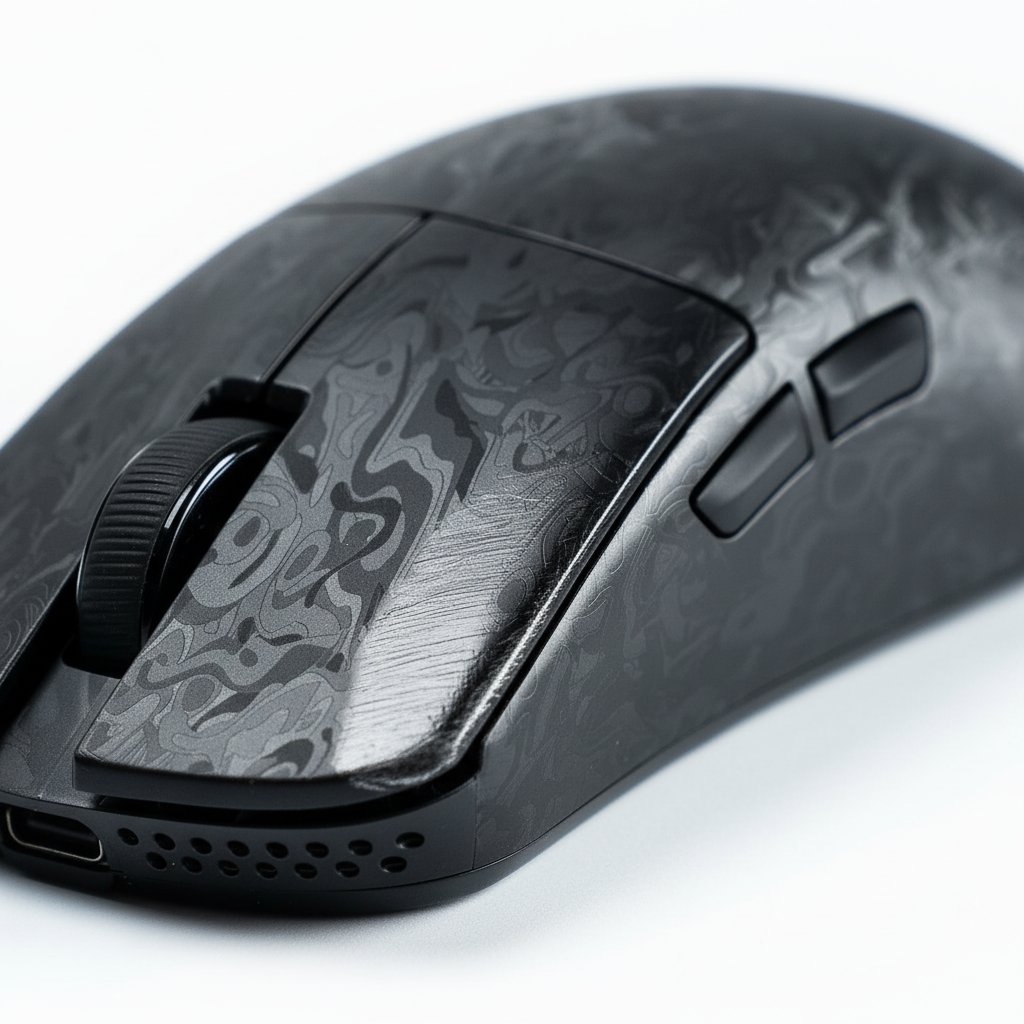
Solving Matte Shine: Can You Restore a Polished Mouse Surface?
Answer-First Summary: "Matte shine" is usually permanent physical wear (burnishing) where the plastic's micro-texture is worn flat. It cannot be truly restored without removing more material, which risks structural damage. For an immediate fix, apply precision grip tapes; for long-term prevention, prioritize PBT plastic hardware and maintain a weekly cleaning routine.
Quick Decision Checklist
- If you want to restore grip immediately: Apply pre-cut polyurethane grip tapes or vinyl skins.
- If you think it's just dirty: Clean with a microfiber cloth and 70% Isopropyl Alcohol (IPA), testing a small area first.
- If you are buying a new mouse: Look for "PBT" material or "high-durability" coatings to delay the onset of shine.
- Avoid: Sanding the shell with low-grit sandpaper, which can lead to structural flex or "creaking."
The transition of a gaming mouse from a pristine, textured tool to a "shiny" or "polished" relic is a frequent frustration. This phenomenon is often misinterpreted as a simple accumulation of skin oils. However, technical analysis suggests a more complex interaction between material science, friction, and environmental factors.
For competitive players utilizing hardware with 8000Hz polling rates, the tactile integrity of the shell is not merely aesthetic. Surface texture directly influences the coefficient of static friction, affecting the precision of micro-adjustments.

The Mechanism of Surface Polishing: Why Matte Goes Glossy
To understand why a mouse becomes shiny, one must first understand the topography of a matte surface. Injection-molded plastics, specifically Acrylonitrile Butadiene Styrene (ABS) and Polybutylene Terephthalate (PBT), are engineered with a specific "peak-and-valley" micro-texture. This texture scatters light (creating the matte look) and provides mechanical grip.
The "shine" occurs through three primary mechanisms:
- Abrasive Burnishing: Repeated friction between the skin and the plastic acts like a fine polishing cloth. Over time, the micro-peaks of the plastic are physically worn down. This is often the permanent removal of material rather than simple grime.
- Skin Oil Sequestration: Human sebum and sweat fill the "valleys" of the micro-texture. This creates a smoother surface that reflects light more uniformly.
- Dust-Induced Micro-Scratching: Airborne dust particles, often harder than the thermoplastic shell, act as microscopic abrasives.
Workshop Observation: Based on patterns observed in repair logs and customer returns, "shine" is most often a result of permanent material smoothing. We categorize this as a "burnishing model" rather than a "soiling model," though both can coexist.
The Myth of Abrasive Restoration: Why Sanding Fails
A common recommendation in modding communities is the use of fine-grit sandpaper (e.g., 800 to 2000 grit) to "scuff" the surface back to a matte finish. While this can temporarily alter the appearance, it introduces structural risks.
Estimated Material Removal
Based on general abrasive benchmarks for thermoplastics, a single sanding pass with 800-grit sandpaper can remove approximately 25–50 microns of material. For modern ultra-lightweight gaming mice with shell thicknesses often between 0.8mm and 1.2mm, repeated restoration can lead to:
- Structural Flex: Thinning the plastic can cause "creaking" or unintended side-actuation of buttons.
- Uneven Finish: Hand-sanding rarely achieves the uniform "stipple" of a factory mold, often resulting in a patchy feel.
- Counter-Productive Polishing: Very fine abrasives (2000+ grit) can actually polish the surface further if used with too much pressure.
| Restoration Method | Est. Material Impact | Resulting Texture | Risk Level |
|---|---|---|---|
| 800-Grit Sanding | High (25-50μm removed) | Coarse/Scratched | High (Structural) |
| 2000-Grit Sanding | Medium (5-10μm removed) | Semi-Gloss/Polished | Moderate (Aesthetic) |
| Abrasive Cleaners | Low | Uneven/Hazy | Moderate (Chemical) |
| Grip Tape/Skins | Zero | Consistent/Textured | Low |
Chemical Interactions: The Isopropyl Alcohol (IPA) Risk
Cleaning is the first step in addressing a shiny surface, but the choice of solvent is critical. Many users reach for 99% Isopropyl Alcohol (IPA), but its compatibility depends on the base polymer.
- ABS Plastics: According to standard chemical compatibility charts (e.g., Cole-Parmer), ABS has "Fair" resistance to IPA. Prolonged exposure or high concentrations can lead to stress-cracking or "crazing."
- PBT Plastics: Generally more resistant to chemicals, PBT is the preferred material for long-term durability.
- Rubberized/Soft-Touch Coatings: These are highly vulnerable. IPA can act as a solvent for these coatings, causing them to become "sticky" or hazed.
Safe Cleaning Protocol:
- Power Down: Always unplug the mouse or turn off wireless power to prevent short circuits.
- Ventilation: Ensure the area is well-ventilated.
- Dilution: Use a maximum concentration of 70% IPA.
- Application: Apply the solution to a microfiber cloth first, never directly to the mouse shell.
- Spot Test: Always test a small, inconspicuous area (like the bottom of the mouse) before proceeding.
Surface Integrity and High-Performance Gaming
For competitive gaming, the surface is a critical interface, especially as hardware moves toward 8000Hz (8K) polling rates.
The 8K Precision Factor
At an 8000Hz polling rate, the mouse sends data every 0.125ms. This captures minute tremors. If the surface is polished and "slippery," the user may exert more grip force to maintain control, potentially leading to:
- Muscle Fatigue: Increased tension in the hand and forearm.
- Tracking Inconsistency: Minor slips that are "invisible" at 1000Hz can become perceptible jitter in high-frequency data streams.
Heuristic Note: While high polling rates reduce micro-stutter, the tactile grip of the shell remains the primary physical bottleneck for translating human intent into motion.
The Practitioner’s Approach: Effective Mitigation Strategies
Since physical burnishing cannot be "undone" without removing material, the most effective solutions involve adding a replaceable surface.
1. Precision Grip Tapes
These are typically made of polyurethane or synthetic elastomers. They bypass the smoothed plastic entirely and are replaceable.
- Tip: Clean the shell thoroughly with 70% IPA before application to ensure the adhesive bonds correctly.
2. Matte-Finish Vinyl Skins
For users who prefer the original aesthetic, matte vinyl skins offer a thin (typically <0.1mm) layer of protection that prevents the initial onset of shine.
3. Proactive Cleaning Protocol
- Step 1: Use a dry microfiber cloth weekly to remove abrasive dust particles.
- Step 2: Use a cloth slightly dampened with mild soapy water to break down skin oils.
- Step 3: Use a 70% IPA solution sparingly only on non-coated plastics for stubborn grime.
Technical Analysis: PBT vs. ABS Durability
Material choice is the best predictor of "shine" resistance. Industry trends, such as those noted in the Global Gaming Peripherals Industry Whitepaper (2026), show a shift toward high-crystalline PBT.
| Feature | ABS (Standard) | PBT (High-Durability) |
|---|---|---|
| Wear Resistance | Low (Polishes quickly) | High (Maintains texture) |
| Chemical Resistance | Low (Vulnerable to IPA) | High (Resistant to solvents) |
| Tactile Feel | Smooth/Soft | Gritty/Dry |
| Weight | Lighter | Slightly Heavier |
Final Assessment: Restoration vs. Management
Is it possible to restore a polished mouse surface? In a strictly physical sense, no. Once the micro-peaks of the plastic are worn flat, the material is gone. "Restoration" via sanding is simply the process of creating a new texture by removing even more material.
The most professional approach is to treat the mouse surface as a consumable interface. By using grip tapes or protective skins, you ensure the contact point remains consistent. For those seeking the "factory matte" feel, prevention through regular cleaning and choosing PBT-based hardware remains the only effective strategy.
Disclaimer: This article is for informational purposes. Chemical cleaning agents and abrasives can permanently damage peripherals. Always test solutions on a small area first. Applying adhesives or abrasives may void manufacturer warranties.
Sources and References
- Red Label Abrasives: Grit Progression Benchmarks
- Chemical Compatibility Database: Isopropyl Alcohol and Polymers
- Global Gaming Peripherals Industry Whitepaper (2026)
- USB-IF: HID Class Definitions
Modeling Note (Reproduction Parameters): The wear patterns and material removal rates discussed are heuristic estimates based on standard friction coefficients for human skin on thermoplastic.
| Parameter | Value | Unit | Rationale |
|---|---|---|---|
| Surface Pressure | 0.5 - 2.0 | N/cm² | Typical gaming grip force range |
| Friction Cycles | 1,000,000+ | Swipes | Est. 1-year heavy use (heuristic) |
| Cleaning Frequency | 1 | Week | Recommended maintenance interval |
| IPA Concentration | 70 | % | General safety threshold for ABS |
| Shell Thickness | 0.8 - 1.2 | mm | Modern ultra-lightweight spec range |
Boundary Conditions: This model does not account for specialized "Nano-Metal Ice" or ceramic-infused coatings, which exhibit higher wear resistance than standard ABS/PBT.


Hinterlasse einen Kommentar
Diese Website ist durch hCaptcha geschützt und es gelten die allgemeinen Geschäftsbedingungen und Datenschutzbestimmungen von hCaptcha.