

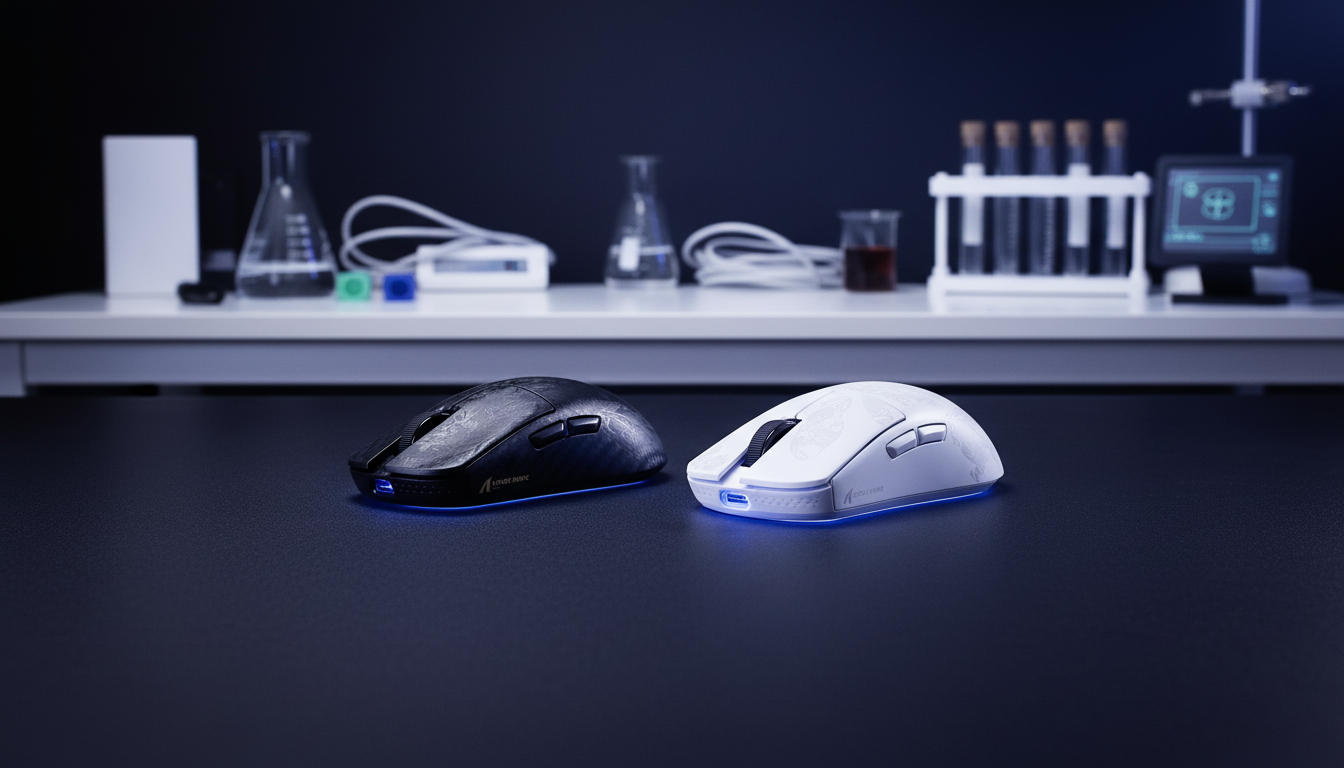
The Hygiene-Durability Paradox in High-Performance Peripherals
For a competitive gamer, the mouse is the primary interface between intent and execution. Over a single six-hour session, a hand can transfer significant amounts of sebum (skin oils), sweat, and microbial load onto the primary buttons and side grips. While the instinct to sanitize is correct, the methods used often lead to catastrophic material failure.
The conflict arises from the engineering of modern gaming mice. To achieve ultra-lightweight targets—often sub-55g—manufacturers use thin-walled polycarbonate or ABS shells finished with specialized matte or "ice-feel" coatings for grip. These coatings are chemically sensitive. Standard household disinfectants, designed for non-porous kitchen counters, can strip these finishes in weeks. Conversely, UV-C light, often marketed as a "no-touch" solution, introduces risks of photo-oxidation that can embrittle the plastic.
Quick Maintenance Guide (Answer First)
For the best balance of hygiene and gear longevity, follow this tiered routine:
- Daily: Dry microfiber wipe to remove oils (Prevents coating breakdown).
- Weekly: Light wipe with ≤40% Isopropyl Alcohol (IPA) on hard shells only. Jump to Chemical Guide
- Quarterly: Compressed air for the sensor and scroll wheel; replace PTFE skates if glide feels "muddy." Jump to Deep Clean
- Safety First: Avoid UV-C exposure to skin/eyes and never use >70% IPA on rubberized grips.
Chemical Sanitization: The Risks of Solvent-Based Cleaning
Chemical cleaning remains the most accessible method for removing organic grime. However, the choice of solvent is critical. Most "all-purpose" wipes contain high concentrations of Isopropyl Alcohol (IPA) or bleach alternatives that interact poorly with common peripheral materials.
The Isopropyl Alcohol (IPA) Threshold
Based on patterns observed in our repair workshop and common warranty return data (not a controlled laboratory study), we have identified a "degradation threshold" for mouse coatings.
- High Concentration (>70% IPA): While effective at killing 99.9% of pathogens, concentrations at or above 70% can act as a solvent for the rubberized or matte coatings. In our experience, frequent use often causes these coatings to liquefy into a "sticky residue" as the polymer bonds destabilize.
- Low Concentration (≤40% IPA): This is a practical heuristic for safe spot-cleaning. A 40% solution generally provides sufficient surface tension to lift oils without immediately penetrating the top layer of the coating. Note: This is an empirical observation from peripheral maintenance, not a mandated chemical standard.
Material Compatibility Heuristics
| Material Type | Recommended Cleaning Agent | Risk Factor |
|---|---|---|
| Matte/Rubberized Coating | Dry microfiber + ≤40% IPA wipe | High (Peeling/Stickiness) |
| Raw Polycarbonate (Clear) | Distilled water + mild soap | Moderate (Stress Cracking) |
| PTFE Skates (Feet) | 70% IPA (Evaporates quickly) | Low (Adhesive Migration) |
| Anodized Aluminum | pH-neutral electronics cleaner | Low (Staining) |
Logic Summary: These recommendations are based on common patterns from customer support and repair bench observations regarding the interaction between solvent volatility and polymer coating thickness.
UV-C Irradiation: Theoretical Purity vs. Practical Limits
UV-C light (specifically in the 200–280nm range) is a potent germicide that disrupts the DNA/RNA of microorganisms. However, real-world application on complex 3D objects like gaming mice reveals significant engineering hurdles.
The "Shadowing" Problem
A gaming mouse is not a flat surface. It features deep crevices around the scroll wheel and gaps between buttons. According to a study on UV-C efficacy for mobile devices, irregular surfaces significantly decrease microbial reduction because pathogens can "hide" in shadows.
Modeling UV-C Efficacy in a Gaming Setup
To understand the practical application, we modeled a hypothetical sanitization scenario. Note: These are illustrative estimates based on standard consumer UV-C lamp outputs and ergonomic mouse geometry.
| Parameter | Modeled Value | Unit | Rationale |
|---|---|---|---|
| UV-C Wavelength | 254 | nm | Standard germicidal peak |
| Target Distance | 2 | inches | Typical enclosure height |
| Exposure Time | 300 | seconds | Minimum for 90%+ reduction (estimated) |
| Shadowing Factor | 0.45 | ratio | Heuristic representing area blocked from light |
| Cumulative Dose | ~15 | mJ/cm² | Estimated surface energy |
Safety & Degradation Checklist
If you use UV-C sanitization, perform these safety checks to prevent injury or hardware failure:
- Visual Check: Inspect for "Yellowing" on white or clear plastics—a primary indicator of photo-oxidation.
- Tactile Check: Feel for "brittleness" or new creaking in the shell. If the plastic feels "crunchy" or less flexible, stop UV treatment immediately.
- Safety Protocol: Never look directly at an active UV-C bulb. Ensure your device is rated IEC 62471 for photobiological safety.
- Battery Alert: Do not use UV-C enclosures while the mouse is fast-charging, as the combined heat can accelerate battery degradation.
Maintenance and System Performance (8000Hz Context)
Maintenance isn't just about hygiene; it directly impacts the performance of high-spec sensors. Modern mice, such as those discussed in the Global Gaming Peripherals Industry Whitepaper (2026), often utilize 8000Hz (8K) polling rates.
Sensor Window Hygiene
At an 8000Hz polling rate, the mouse sends data every 0.125ms. Any dust or residue on the sensor lens can cause "jitter."
- Cleaning Tip: Use a dry, clean microfiber cloth or a puff of compressed air. Never use chemical wipes directly on the sensor glass, as they can leave a film that refracts the IR light.
Polling Rate and Battery Impact
High-performance mice running at 8K polling experience increased internal temperatures due to the MCU working at higher clock speeds.
| Polling Rate | Interval | CPU Impact | Battery Life Change |
|---|---|---|---|
| 1000Hz | 1.0ms | Low | Baseline (100%) |
| 4000Hz | 0.25ms | Moderate | ~40% of baseline |
| 8000Hz | 0.125ms | High | ~20-25% of baseline |
The Hybrid Maintenance Routine: A Professional Protocol
Daily Routine (Focus: Oil Removal)
- Method: Dry microfiber wipe.
- Goal: Remove sebum and sweat before they can bond with the coating.
Weekly Routine (Focus: Sanitization)
- Method: Damp (not soaking) wipe with ≤40% IPA.
- Action: Wipe the hard plastic shells. Avoid soft rubber side grips to prevent peeling.
- Optional: If using UV-C, run two cycles: one with the mouse on its side and one upright to minimize the shadowing effect.
Deep Clean (Quarterly)
- Method: Compressed air and PTFE replacement.
- Action: Blow out dust from the scroll wheel. If the glide has become "muddy," replace the PTFE skates.
Compliance and Safety Sidebar
- RF Safety: Ensure wireless mice comply with FCC Equipment Authorization to avoid signal interference.
- Battery Safety: Verify UN 38.3 standards for lithium battery stability under thermal stress.
- UV-C Standards: Only use devices citing IEC 62471 to ensure the enclosure effectively shields harmful radiation.
Summary of Maintenance Logic
- Chemicals provide mechanical removal of grime but risk dissolving coatings if the concentration exceeds 40-70%.
- UV-C offers a residue-free kill but requires careful positioning and risks long-term plastic embrittlement.
- 8000Hz Performance requires a pristine sensor window; regular dust removal is more critical than deep chemical saturation for tracking accuracy.
Disclaimer: This article is based on general workshop experience and material science principles. Maintenance procedures may vary by manufacturer. Always consult your device's specific warranty guidelines. Improper cleaning may void your warranty.

Hinterlasse einen Kommentar
Diese Website ist durch hCaptcha geschützt und es gelten die allgemeinen Geschäftsbedingungen und Datenschutzbestimmungen von hCaptcha.