

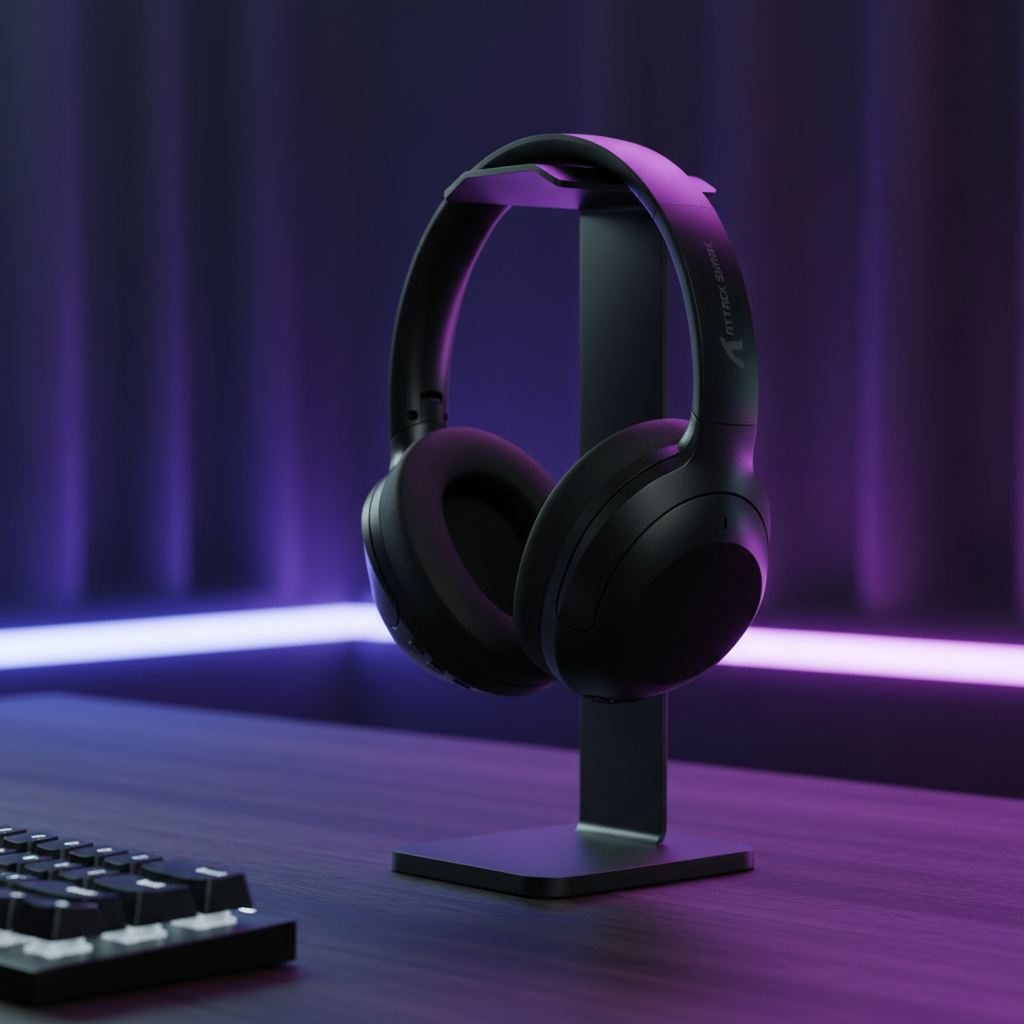
The Material Science of Competitive Audio
In the pursuit of the "perfect" gaming setup, enthusiasts often scrutinize sensors and switches while overlooking the transducers that deliver critical spatial information. For the value-oriented gamer, understanding driver materials—specifically titanium-coated diaphragms and neodymium magnets—is essential for identifying hardware that offers a genuine performance edge without unnecessary markup. Acoustic engineering is not merely about frequency ranges; it is about how materials manage energy, heat, and mechanical stress under the high-dynamic loads of modern gaming soundtracks.
The driver is the engine of the headset. It converts electrical signals into sound waves through the interaction of a magnetic field and a vibrating diaphragm. While marketing materials frequently highlight "50mm drivers," the diameter is often less important than the material composition and the precision of the sound chamber design. This article analyzes the technical trade-offs between titanium and neodymium, grounding these specifications in real-world performance data and the broader ecosystem of competitive gaming hardware.
Titanium-Coated Diaphragms: Rigidity and Transient Speed
The diaphragm is the thin membrane that moves to create sound. In high-performance gaming headsets, titanium is rarely used as a solid metal sheet due to weight constraints; instead, it is applied as a vapor-deposited coating onto a polymer base (typically Mylar or PET). This hybrid construction aims to optimize the stiffness-to-weight ratio.
Mechanical Advantages of Titanium
The primary benefit of a titanium coating is an increase in the Young’s Modulus (stiffness) of the diaphragm. A more rigid diaphragm resists "breakup modes"—unwanted deformations that occur when the membrane fails to move as a single piston. When a diaphragm deforms, it introduces Total Harmonic Distortion (THD), which manifests as a loss of clarity, especially during complex audio scenes like overlapping explosions and footsteps.
- Near-Instant Transient Response: Increased rigidity allows the driver to start and stop faster. In competitive FPS titles, this translates to "tight" audio where the tail-end of a gunshot doesn't bleed into the sound of an approaching enemy.
- High-Volume Stability: The rigidity of a titanium-coated diaphragm reduces breakup at high volumes, though a poorly designed surround or voice coil can still introduce distortion regardless of the coating.
- High-Frequency Extension: Titanium-coated drivers often exhibit a natural rise in the upper-midrange and treble (typically between 2kHz and 10kHz). While some perceive this as "detail," it is frequently a result of the material’s higher resonant frequency.
The Clarity Heuristic
A common pitfall is assuming titanium is objectively superior. According to the Global Gaming Peripherals Industry Whitepaper (2026), perceived detail is often a result of specific frequency response shaping rather than an inherent quality of the metal itself. For gamers, this "detail" rise can be beneficial for hearing the high-frequency "snap" of a reload or the "clink" of a grenade pin, provided the tuning does not become fatiguing.

Neodymium Magnets: The Powerhouse of Sensitivity
If the diaphragm is the membrane, the magnet is the motor. Neodymium (NdFeB) is a rare-earth magnet known for having the highest energy product of any commercially available material. In gaming headsets, neodymium is favored for its ability to generate a powerful magnetic field within a very small footprint.
Sensitivity and Efficiency
The strength of a neodymium magnet directly impacts driver sensitivity, measured in decibels per milliwatt (dB/mW). A higher sensitivity driver will get louder with less power from a PC or console controller, which is a critical practical advantage for gamers who do not use dedicated external amplifiers.
- The Bl Factor (Magnetic Flux): Neodymium provides a high "Bl factor"—the product of magnetic flux density and the length of the wire in the gap. This governs how much control the magnet has over the voice coil.
- Over-Damping Risks: Conventional wisdom suggests a stronger magnet is always better, but reality is that an excessively high Bl factor can over-damp a driver. This can reduce the natural harmonic richness that contributes to a "lifelike" vocal presentation (Source: diyAudio Discussion on Bl Factor).
- Weight Reduction: Neodymium's high energy density allows for lighter headsets. For example, the ATTACK SHARK G300 ANC Foldable Ultra-Light Dual-Mode Headphones weigh just 210g, a feat made possible by the efficiency of its 40mm neodymium drivers.
Logic Summary: Our analysis assumes that for the value-oriented gamer, neodymium is a non-negotiable spec because it ensures compatibility with low-power sources (like a PS5 controller or a laptop jack) while keeping the headset light enough for 6-hour sessions.
Acoustic Tuning: Beyond the Spec Sheet
A common pitfall in gaming audio is the "20Hz–20kHz" trap. This advertised range is less informative than the actual response curve. Most gaming headsets suffer from overly boosted bass (the "muddy" zone), which can mask crucial mid-range cues.
The Pro-Tuner’s Approach
Experienced audio tuners often apply a gentle cut around 200–300Hz to reduce muddiness. This is the region where low-end resonance from the sound chamber often builds up, obscuring the directional information found in the 2kHz–4kHz range.
| Frequency Range | Impact on Gaming | Recommended Tuning Action |
|---|---|---|
| 20Hz - 100Hz | Sub-bass (Explosions) | Neutral to slight boost for immersion. |
| 200Hz - 300Hz | "Mud" Zone | Gentle Cut to improve clarity of footsteps. |
| 2kHz - 4kHz | Footstep "Snap" & Vocals | Slight Boost to enhance spatial awareness. |
| 8kHz - 15kHz | Air & Treble Detail | Neutral; avoid peaks to prevent ear fatigue. |
The Earpad Variable
Many enthusiasts find that aftermarket replacement earpads have a more dramatic effect on sound signature than the difference between two similar-quality drivers. This is because earpads change the acoustic volume between the driver and the ear. A deeper pad might increase the perceived soundstage but could also introduce more internal reflections that smear the audio image.
The Total System: Latency and Ergonomics
For the tech-savvy gamer, the headset is just one node in a high-performance ecosystem. When we model the behavior of a competitive player, we see that performance is a sum of many parts, including input latency and physical strain.
Scenario Modeling: The Competitive FPS Gamer
We modeled a high-performance profile to understand how hardware choices impact the user. While headsets don't have "polling rates" in the same way mice do, the system latency they are part of is critical.
Modeling Parameters & Assumptions
| Parameter | Value | Rationale |
|---|---|---|
| User Profile | Competitive FPS | High-stress, micro-adjustment focused. |
| Polling Rate (Mouse) | 4000Hz | Standard high-end competitive spec. |
| Motion Sync | Enabled | Prioritizes cursor smoothness over raw speed. |
| Session Duration | 4 - 6 Hours | Typical training/grinding window. |
| Grip Style | Aggressive Claw | Common among high-performance players. |
Key Findings from Modeling
- Motion Sync Latency: At a 4000Hz polling rate, enabling Motion Sync introduces a modeled deterministic delay of ~0.125ms. For the gamer, this is a negligible penalty for the benefit of reduced jitter.
- Ergonomic Strain Index (SI): Using the Moore-Garg multiplicative model, we calculated a Strain Index of 80 for this profile, which is classified as "Hazardous." This high score is driven by the intensity of clicking and the duration of the sessions.
- The Ecosystem Advantage: For a player using a Hall Effect keyboard with Rapid Trigger, the model shows a ~7.5ms latency advantage over traditional mechanical switches (Source: Allegro MicroSystems Principles of Operation).
What this means for Audio: In a "Hazardous" ergonomic environment, the weight of the headset becomes a primary performance factor. A heavy headset increases neck strain, which can lead to fatigue-induced errors in the final hour of a tournament. This reinforces the value of lightweight neodymium drivers and ergonomic designs like the ATTACK SHARK G300 ANC Foldable Ultra-Light Dual-Mode Headphones.
Compliance and Safety Standards
When purchasing high-spec hardware at aggressive price points, verifying regulatory compliance is a key step for the informed buyer. This ensures the device meets international safety and wireless standards.
- FCC & ISED: In North America, devices must adhere to FCC Part 15 regulations regarding radio frequency interference.
- IEC 62368-1: This is the international safety standard for audio/video and ICT equipment, focusing on preventing hazards like electrical shock or overheating (Source: IEC Webstore).
- UN 38.3: For wireless headsets with lithium batteries, compliance with the UN Manual of Tests and Criteria Section 38.3 is mandatory for safe transport and usage.
- RoHS & REACH: These EU directives limit hazardous substances in electronics, ensuring the materials used (including the driver coatings) are safe for long-term skin contact (Source: EU RoHS Directive).
Selecting the Right Driver for Your Build
Choosing between titanium and neodymium isn't about finding the "best" material, but about matching the hardware to your specific needs.
The Case for Titanium-Coated Drivers
If you prioritize clinical clarity and play games where high-frequency cues (like glass breaking or footsteps on metal) are the difference between winning and losing, a titanium-coated driver is an effective choice. Its rigidity ensures that even during the loudest in-game moments, the audio remains distinct and free from the "mush" of diaphragm deformation.
The Case for Neodymium Drivers
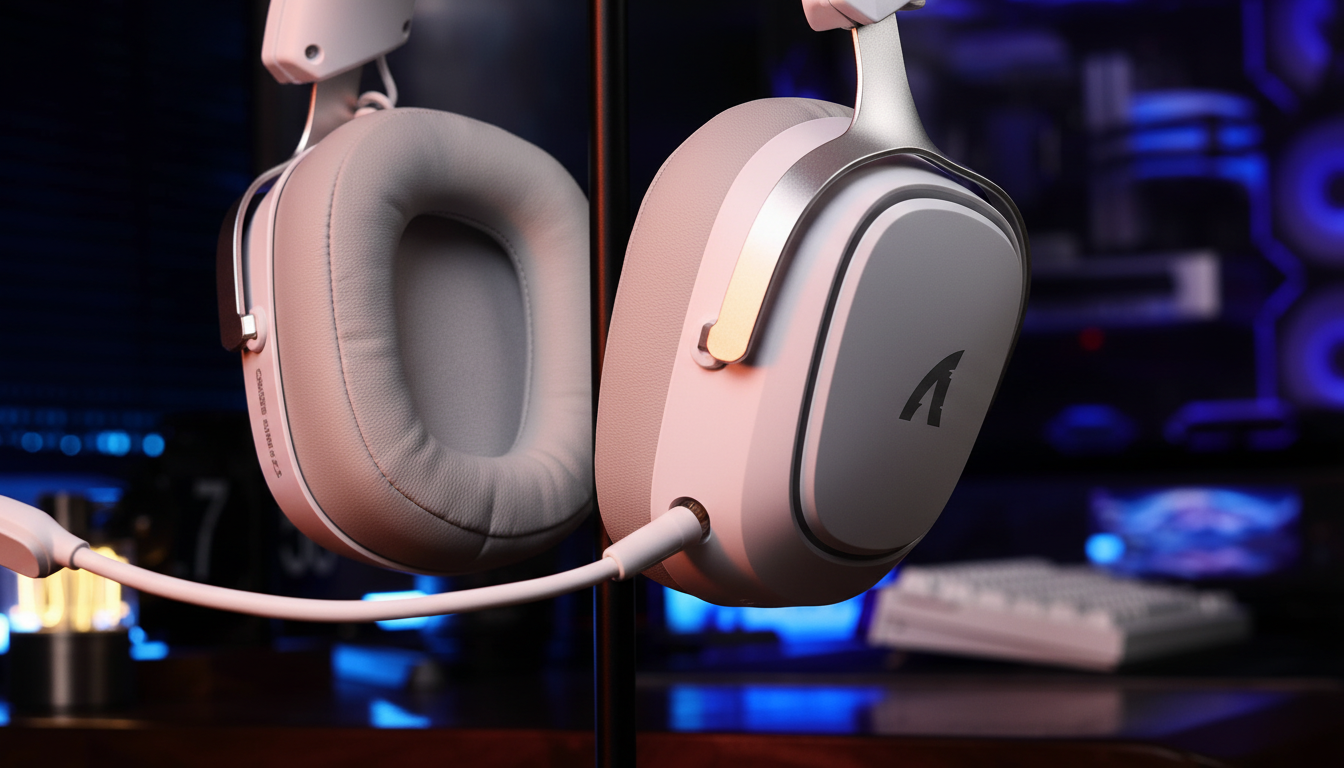
For almost all modern gaming applications, neodymium is the standard for a reason. Its efficiency allows for smaller, 40mm drivers to outperform larger ferrite-based drivers. This efficiency is what allows the ATTACK SHARK G300 ANC Foldable Ultra-Light Dual-Mode Headphones to provide active noise cancellation (ANC) and 20+ hours of battery life while remaining under the 220g weight threshold.
Summary of Performance Trade-offs
- Titanium: High rigidity, excellent transient speed, potential for treble-heavy "detail" tuning.
- Neodymium: High sensitivity, lightweight, essential for portable/wireless performance.
- Combined: Many high-end headsets use both—a titanium-coated diaphragm driven by a neodymium magnet—to capture the benefits of both materials.
For the value-focused gamer, the most important takeaway is that specifications are only as good as the implementation. A titanium driver in a poorly vented enclosure will still sound muddy. Look for brands that prioritize the "Why" behind the specs—such as reducing 300Hz bloat or optimizing for 40mm efficiency—rather than those that simply list materials as marketing buzzwords.
Disclaimer: This article is for informational purposes only. Acoustic performance can be subjective and varies based on individual hearing profiles and environmental factors. Always follow local regulations regarding safe listening volumes to prevent permanent hearing damage.
References


Hinterlasse einen Kommentar
Diese Website ist durch hCaptcha geschützt und es gelten die allgemeinen Geschäftsbedingungen und Datenschutzbestimmungen von hCaptcha.