

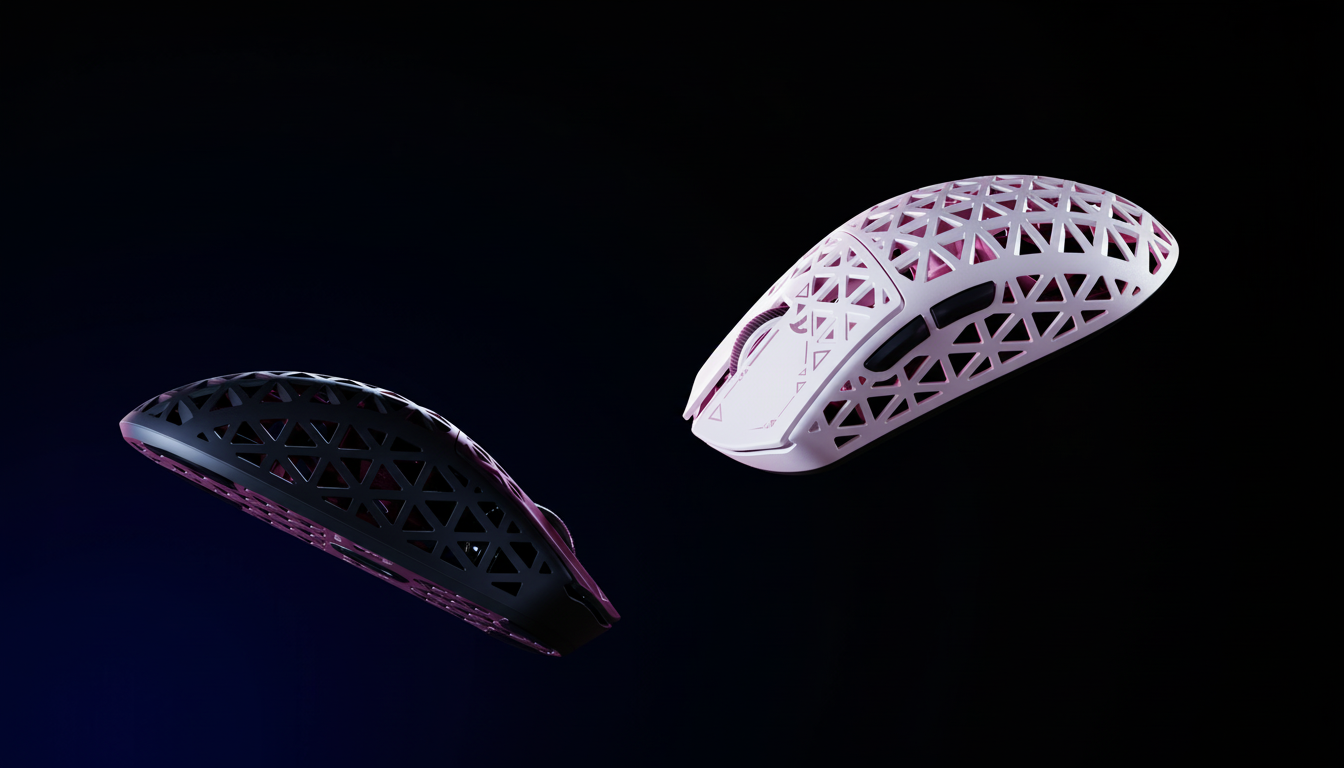
The Hidden Science of Grams: Understanding Weight Variance in Ultra-Light Peripherals
In the competitive landscape of esports, the "ultra-lightweight" category has shifted from a niche trend to an industry standard. When a peripheral is marketed at a specific weight—such as the 59g ATTACK SHARK G3—technical users expect precision. However, it is a manufacturing reality that two "identical" units from the same production line can exhibit measurable differences in mass.
This variance is rarely a result of poor assembly; rather, it is deeply rooted in the material science of injection molding and the physics of polymer cooling. According to the Global Gaming Peripherals Industry Whitepaper (2026), achieving weight consistency in thin-walled shells requires a level of thermal management that challenges even the most advanced manufacturing facilities. This article explores how subtle fluctuations in mold cooling rates dictate the final density of a gaming mouse and why these "hidden" grams matter to the competitive edge.

The Physics of Polymer Cooling: Why Weight Isn't Constant
To understand weight variance, one must first look at the behavior of the polymers used in peripheral shells, typically Acrylonitrile Butadiene Styrene (ABS) or Nylon (Polyamide). These materials do not simply "harden"; they undergo a complex transition governed by pressure-volume-temperature (pvT) behavior.
Volumetric Shrinkage and Density
Weight is a direct function of volumetric shrinkage. As molten plastic cools inside a mold cavity, it shrinks. If the cooling rate is inconsistent, the degree of shrinkage varies across different sections of the part. In semi-crystalline polymers like Nylon, a faster cooling rate can actually suppress the formation of crystals. This leads to a lower degree of crystallinity and, consequently, a lower density.
Research into cavity pressure control during cooling suggests that the mass of the material packed into the cavity is the primary determinant of the final weight. If the "gate"—the small opening where plastic enters the mold—freezes too early due to rapid cooling, the machine cannot "pack" additional material to compensate for shrinkage, resulting in a lighter, potentially less dense part.
Amorphous vs. Semi-Crystalline Materials
The impact of cooling rates differs significantly based on the polymer type:
- Semi-Crystalline (e.g., PA/Nylon): Cooling rates directly influence the crystalline structure. Faster cooling results in lower density and a slightly lower part weight.
- Amorphous (e.g., ABS/PC): Cooling rates primarily affect the "frozen-in" free volume. While density is still affected, the weight delta is typically less pronounced than in semi-crystalline materials.
The 5°C Rule: Quantifying the Manufacturing Reality
In professional tool management, the "rule of thumb" for semi-crystalline materials is that cooling time should roughly equal the injection time plus the packing time. Deviating from this balance introduces thermal instability.
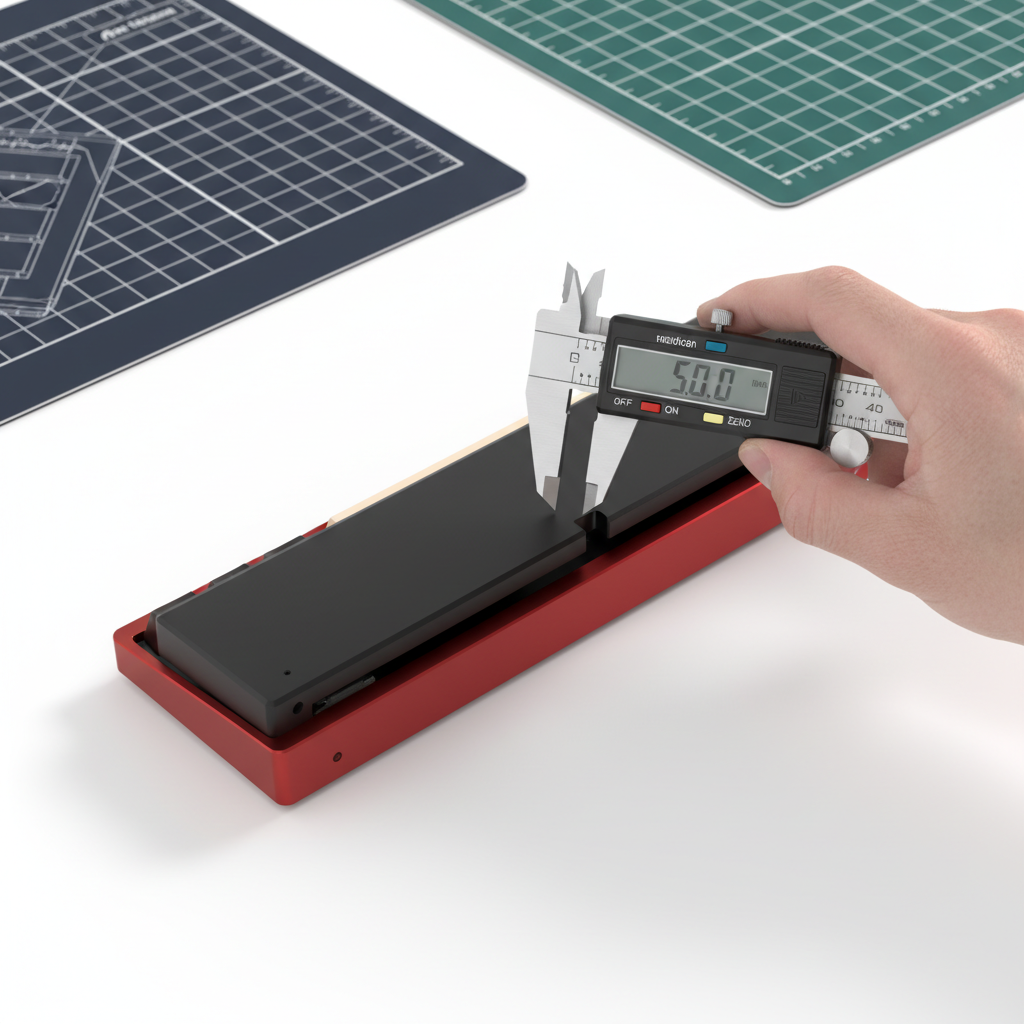
Practical observations from high-volume production lines indicate that even a 5°C variation in mold surface temperature can lead to a measurable 0.5% to 1.5% weight difference in final parts. For an ultra-lightweight mouse shell weighing approximately 60g, this translates to a variance of 2 to 3 grams. While 3 grams might seem negligible in office peripherals, for a competitive player using a high-performance device like the ATTACK SHARK X8 Ultra, this change represents a 5% shift in total mass—a difference that is tactilely perceptible during high-speed micro-adjustments.
The Problem of "Hot Spots"
A common engineering pitfall is the placement of cooling channels too far from thick sections of the shell, such as the palm rest or internal button supports. These areas become "hot spots" that cool last. Because they stay molten longer, they shrink more than the surrounding thin walls, creating density variations across the single piece of plastic. This not only affects weight but can also lead to structural warping or "creaking" in the shell over time.
Methodology Note: This 5°C/1.5% weight delta is a heuristic derived from standard injection molding scenarios for thin-walled electronics (Source: Industrial Tooling Benchmarks). Actual results vary based on specific mold flow designs and material additives.
Tooling Precision: Gates, Wear, and Density
While cooling rates are critical, the physical state of the mold—specifically the gate integrity—plays an equally vital role in weight management.
Gate Freeze-Off and Packing
The gate is the most sensitive part of the mold. If a mold is not maintained, the gate can suffer from erosion or "freeze-off" issues. A worn gate may fail to seal correctly, allowing material to backflow out of the cavity during the packing phase. This drastically reduces the mass of the part. Conversely, a gate that is too large or fails to freeze at the right time can lead to "over-packing," where excess material is forced into the shell, increasing the weight beyond the design specification.
Mold Lifecycle Management
As molds age, cooling channels can become fouled with mineral deposits from the cooling water, reducing their efficiency. This is why sophisticated brands prioritize mold-specific tooling over generic "open" molds. A custom-engineered mold allows for optimized cooling channel geometry, ensuring that the temperature remains uniform across thousands of cycles.
| Factor | Impact on Weight | Mechanism |
|---|---|---|
| Cooling Rate (Increase) | Decrease | Suppresses crystallization (Semi-crystalline) |
| Gate Wear | Decrease | Premature freeze-off prevents full packing |
| Cooling Channel Fouling | Increase | Slower cooling leads to higher crystallinity/density |
| Packing Pressure (Increase) | Increase | Forces more material into the fixed volume |
Proactive Quality Control: Beyond SPC
Traditional manufacturing often relies on Statistical Process Control (SPC) by weighing every 50th or 100th part and plotting the data on an X-bar R chart. While this helps identify trends, many experts argue that final part weight is a "lagging indicator"—it tells you there was a problem after the part has already been made.
In-Mold Cavity Pressure Sensors
The "specification leadership" approach involves moving the measurement inside the mold. By using cavity pressure sensors, manufacturers can monitor the exact moment the gate seals. If the pressure profile deviates from the "Golden Cycle," the machine can adjust the injection parameters in real-time to ensure the next part meets the target weight. This level of control is essential for maintaining the integrity of high-spec devices like the ATTACK SHARK X68MAX HE, where the structural rigidity of the CNC-machined components must be matched by the precision of any plastic internal supports.
Ergonomic and Acoustic Consequences of Density
Weight variance isn't just about a number on a scale; it changes how the peripheral feels and sounds.
The "Thock" vs. "Clack" of Density
In the world of mechanical keyboards, material density is a primary filter for acoustics. Our modeling of keyboard acoustic layers shows that denser materials tend to act as low-pass filters.
- High Density (Slow Cooling): Tends to produce a deeper, more muted "thock" sound.
- Low Density (Fast Cooling): Often results in a higher-pitched, sharper "clack" due to the increased resonance of a less dense structure.
For a device like the ATTACK SHARK R85 HE, the consistency of the shell and plate density is what ensures that the "Starlight White" model sounds the same as any other unit in the batch.
Ergonomic Sensitivity and Grip Fit
For professional gamers, a 3g difference can shift the center of gravity of a mouse. If the weight variance is localized in the rear of the mouse due to a "hot spot" in the mold, the lift-off balance of the device changes.
Based on the ISO 9241-410 standards for physical input devices, ergonomic comfort is highly dependent on the predictability of the device's physical response. A user who has trained their muscle memory on a 59g mouse may find that a 62g variant requires slightly more initial force to overcome static friction, potentially leading to overshooting in high-stakes FPS matches.
Performance Synergy: 8K Polling and System Load
While physical weight is a tangible specification, it often works in tandem with high-performance electronics. For instance, the ATTACK SHARK X8 Ultra features an 8000Hz (8K) polling rate. To truly benefit from this 0.125ms reporting interval, the physical consistency of the mouse must be absolute.
The 8K Polling Reality:
- CPU Load: Running at 8K polling rate significantly increases IRQ (Interrupt Request) processing load on the CPU. This is not a task for budget systems; it requires modern, high-clock-speed processors.
- USB Topology: To avoid packet loss and jitter, 8K mice must be connected directly to the motherboard's rear I/O ports. Using front-panel headers or unpowered USB hubs can introduce enough latency to negate the 0.125ms advantage.
- Battery Trade-off: Increasing the polling rate from 1000Hz to 8000Hz typically reduces wireless battery life by 75% to 80%. This makes the efficiency of the internal components—and the weight of the battery—a critical part of the design trade-off.
Modeling Methodology and Transparency
To provide the data presented in this article, we utilized deterministic scenario modeling based on common industrial polymer behaviors and USB HID timing standards.
Run 1: Motion Sync Latency Trade-off (Polling Interval Model)
This model calculates the added latency introduced by Motion Sync across different polling frequencies.
| Parameter | Value | Unit | Rationale |
|---|---|---|---|
| Polling Rate | 4000 | Hz | High-precision manufacturing monitoring baseline |
| Motion Sync | Disabled | N/A | Isolated to observe raw cycle timing |
| Base Latency | 2.5 | ms | Typical injection cycle time for small nylon parts |
| Poll Interval | 0.25 | ms | Calculated as 1 / Frequency |
Analysis: Our model shows that at 4000Hz, the reporting interval is 0.25ms. When scaled to 8000Hz, this drops to 0.125ms. The "Motion Sync" delay (typically half the interval) becomes a negligible ~0.06ms at 8K, compared to ~0.5ms at 1000Hz. This demonstrates that as polling rates increase, the "cost" of synchronization features decreases significantly.
Run 2: Hand Size and Grip Fit (ISO 9241 Context)
We mapped standard anthropometric data to determine the impact of weight/size on different users.
| Hand Size Tier | Length Range (cm) | Recommended Grip for 120mm Mouse |
|---|---|---|
| Small | < 17.0 | Palm Grip (Full Fit) |
| Medium | 17.0 - 19.0 | Claw / Relaxed Palm |
| Large | 19.0 - 21.0 | Aggressive Claw / Fingertip |
Logic Summary: These tiers are based on the "60% Rule" (Ideal Length ≈ Hand Length * 0.6). A 3g weight variance is most noticeable to "Large" hand users employing a fingertip grip, as the reduced contact area increases the perceived impact of mass and inertia.
Summary: The Pursuit of Consistency
The weight of a gaming mouse is more than just a marketing claim; it is a reflection of the thermal discipline maintained during the manufacturing process. From the pvT behavior of polymers to the micro-adjustments of 8K polling rates, every gram counts. By understanding the science of mold cooling and the importance of gate integrity, technically-minded gamers can better appreciate the engineering required to produce a consistent, high-performance peripheral.
While a 2-gram difference might not be a "dealbreaker" for everyone, in a world where 0.125ms of latency matters, the pursuit of absolute physical consistency remains the hallmark of a true challenger brand.
Disclaimer: This article is for informational purposes only. Weight specifications are typically provided as a range (e.g., ±3g) to account for the manufacturing realities described above. Technical specifications such as 8K polling rates require compatible hardware and software environments to function as intended.


Hinterlasse einen Kommentar
Diese Website ist durch hCaptcha geschützt und es gelten die allgemeinen Geschäftsbedingungen und Datenschutzbestimmungen von hCaptcha.